
How to Choose the Right PU Sandwich Panel Machine?
PU sandwich panel machines are widely used in modern construction and industrial facilities. These machines produce panels with excellent insulation properties, lightweight and high strength, and are commonly used for roofs, walls, and cold chain logistics. As automation technology advances, choosing the right PU sandwich panel machine directly impacts production efficiency and product quality.
This article provides an in-depth explanation of the working principles of PU sandwich panel machines, factors in equipment selection, and the advantages of these machines to help you make an informed decision.
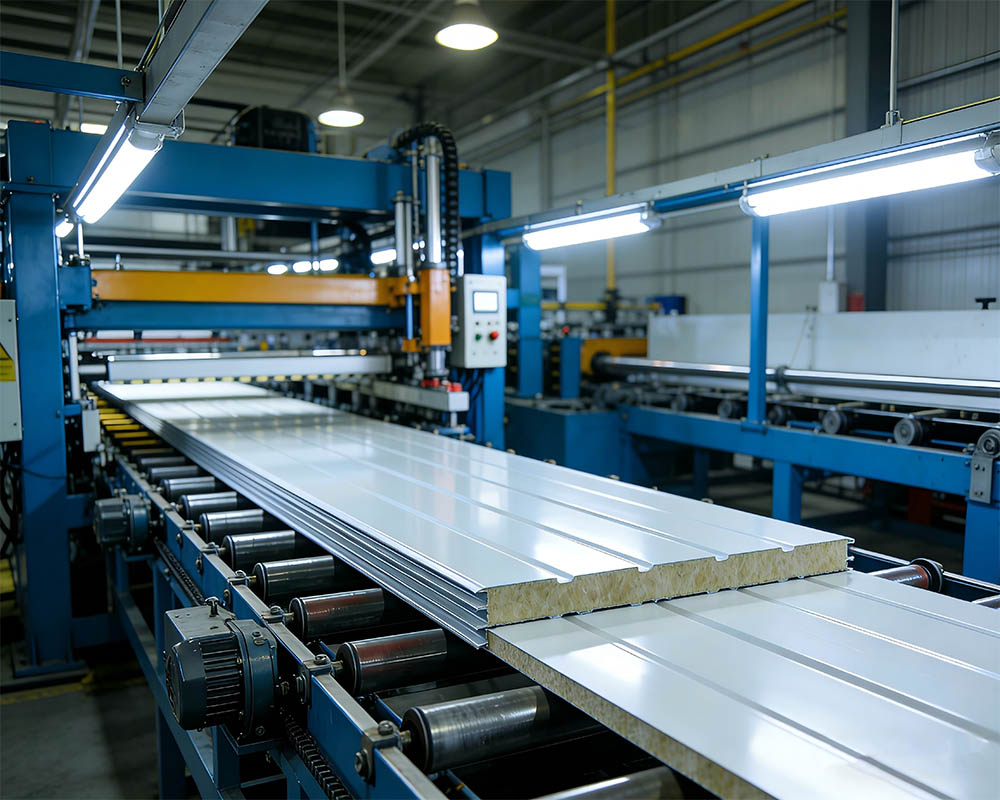 What is a PU Sandwich Panel Machine?
A PU sandwich panel machine is used for manufacturing polyurethane (PU) sandwich panels. The machine combines metal panels with a PU foam core to create composite materials with high insulation, strength, and durability. Due to the growing demand for energy-efficient construction materials, PU sandwich panels are now the material of choice for various buildings.
Features of PU Sandwich Panels
PU sandwich panels offer several features that make them ideal for use in construction and industrial applications:
- Excellent Insulation Properties
The polyurethane foam core offers high thermal resistance, effectively blocking external temperature changes and maintaining a stable indoor environment. - Lightweight and High Strength
PU sandwich panels are much lighter than traditional building materials while still offering strong compression resistance. - Fire Resistance
With proper treatment, PU sandwich panels show significant resistance to high temperatures, maintaining their stability in fire-prone environments.
How Does a PU Sandwich Panel Machine Work?
The working process of a PU sandwich panel machine involves several steps. Each stage works together to ensure the production of high-quality PU sandwich panels. Here are the main components and operations:
1. Raw Material Unwinding and Conveying System
The system unwinds the metal coil and automatically feeds it into the forming area. This step ensures the metal panels remain undamaged and are evenly distributed, setting up the rest of the production process.
2. Roll Forming
The metal panels pass through upper and lower rollers, shaping the panels into the desired profile. This step determines the thickness, width, and surface quality of the panels.
3. PU Foam System
In this system, two components of the PU foam are mixed and sprayed onto the metal panels at high pressure. The foam quickly expands, forming the core that provides insulation and support.
4. Curing System
After the foam is applied, the panels enter a curing area where heat ensures the foam fully hardens, gaining strength and stability. This process has a significant impact on the durability of the final product.
5. Automatic Cutting and Stacking
Once the panels are fully cured, the machine cuts them into specified lengths and automatically stacks the finished products, making them ready for shipment.
How to Choose the Right PU Sandwich Panel Machine?
When selecting a PU sandwich panel machine, in addition to the basic composition, you should pay attention to factors such as production needs, automation level, and customization capabilities. Below are several aspects to consider during selection:
1. Production Capacity and Equipment Stability
The first step is to assess whether the equipment’s production capacity meets your needs. This includes factors like the machine’s production speed per hour, the thickness and width range of the panels, and the equipment’s long-term stability during operation.
2. Automation Level
The automation level of the PU sandwich panel machine impacts production efficiency and product quality. Consider if the equipment comes with a PLC control system, touchscreen interface, and automatic monitoring and fault diagnosis features to reduce manual labor and improve consistency.
3. Customization and Adaptability
Certain projects may require specific sizes, materials, or performance features for the panels. Ensure the machine can be customized to meet these needs. This includes flexibility for panel thickness, material types, and customized functions for specific performance requirements.
4. Energy Efficiency and Environmental Compliance
As environmental regulations become stricter, choosing equipment that meets energy efficiency standards directly affects the production process. Many modern PU sandwich panel machines feature energy-saving designs, which help lower production costs while meeting environmental guidelines.
Advantages of Using a PU Sandwich Panel Machine
Using a PU sandwich panel machine brings significant benefits to building materials production. Below are the main advantages of these machines:
Excellent Insulation Properties
PU sandwich panels, due to their unique foam structure, offer exceptional thermal insulation. This makes them ideal for buildings and facilities that require high insulation, which helps reduce energy consumption.
Lightweight and High Strength
The core material of PU sandwich panels is polyurethane foam, which is both light and strong. This ensures the panels provide long-lasting stability while reducing the overall weight of buildings.
Fast Installation
The standardization and precise dimensions of PU sandwich panels make installation much quicker and easier, which greatly shortens construction time.
Choosing Between a Continuous Production Line and a Batch Production Line
When choosing a production line, the type of production process is a significant consideration. Continuous and batch production lines each have advantages, and selecting the right one depends on production needs.
Continuous Production Line
A continuous production line provides high efficiency and stable operation, making it suitable for large-scale production. It offers consistent output and high product quality, making it ideal for large construction projects.
Batch Production Line
A batch production line is more flexible, making it better for smaller production runs and frequently changing product specifications. This type of line can quickly adapt to different production needs and product varieties.
Conclusion
Choosing the right PU sandwich panel machine is vital for improving the efficiency of building materials production, reducing costs, and ensuring the quality of the final product. By considering factors such as production capacity, automation, customization, and energy efficiency, you can select the most suitable machine for your needs.
If you are looking for a high-quality PU sandwich panel machine, please contact us. We will respond promptly and provide you with personalized equipment recommendations and services.


How can we assist you?
Tell us a bit more so we can route your request to the right expert.
Sign Up For Our Newsletter
Subscribe to our newsletter for product promos, news, and more.