• Search
  • Language EN

Where Does the Roll Forming Production Line Lead?

With the continuous advancement of manufacturing technologies, the roll forming production line, with its high efficiency, precision, and energy-saving advantages, has gradually become an important production method across various industries.

It not only improves material utilization and production efficiency but also reduces energy consumption, meeting increasingly stringent environmental regulations.

This article will delve into the key advantages of the roll forming production line, analyze its wide applications in various fields, and its position in modern manufacturing.

What is a Roll Forming Production Line?

A roll forming production line is a highly automated system that gradually forms metal sheets into continuous, precise profiles using a series of progressive rollers. Each station in the production line precisely changes the geometry of the metal until it reaches the desired final shape. These shapes can be any profile required.

Roll forming technology not only has the characteristics of continuity and high precision but also adapts to different materials and thicknesses.

Compared to traditional stamping processes, it has significant advantages in production speed and cost-effectiveness, significantly increasing production efficiency and reducing raw material waste.
What is the Working Principle of the Roll Forming Production Line?

Raw Material Preparation

First, the metal sheet (usually steel or aluminum) is fed into the production line. The width and thickness of the sheet are selected based on the final product requirements.

Roll Forming

The metal sheet enters a set of rollers, which are composed of multiple forming stations. Each station consists of a pair of rollers arranged at specific shapes and angles, which progressively press and deform the metal sheet into various geometric shapes.

Progressive Deformation

At each station, the rollers apply pressure to the sheet, slightly changing its shape. After passing through each station, the shape of the metal sheet changes incrementally until the desired profile (such as U, C, Z, etc.) is formed.

Precise Control

The roll forming production line uses an automated control system to precisely adjust the pressure, angle, and speed of the rollers, ensuring that the shape of the metal sheet meets the exact requirements. This precision control ensures that the production process is both stable and efficient.

Final Shaping

After passing through multiple stations, the metal sheet is formed into the desired profile, and a cutting system then cuts it to the required length, completing the production process.

What Are the Main Components of the Roll Forming Production Line?

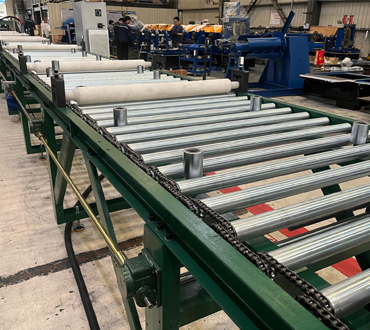
Raw Material Conveyor System

This system is responsible for feeding metal sheets from the storage area to the starting position of the production line.

It typically includes automatic feeding devices, conveyors, and guiding systems to ensure the accurate and stable entry of raw materials into the production line.

Raw Material Conveyor System
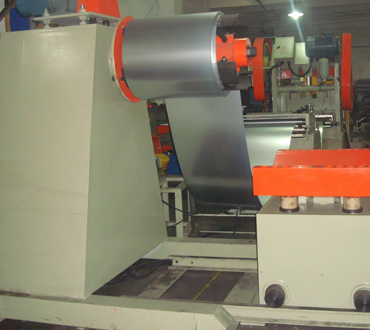
Uncoiler

Uncoiler

The uncoiler is used to unroll the coiled metal sheets into a flat state. It pulls the coil apart and sends the metal sheet to the next process. The stability of the uncoiler is crucial for production efficiency.

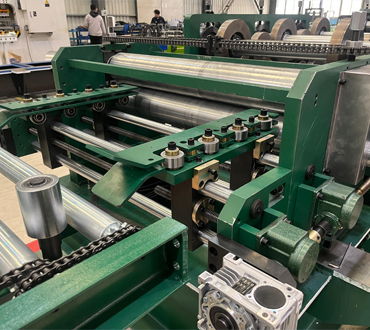
Leveling Machine

The leveling machine is used to flatten the uncoiled metal sheets, removing any existing bends or waves. By leveling the sheets, it ensures that the metal remains straight during the roll forming process, preventing deformation.

Leveling Machine
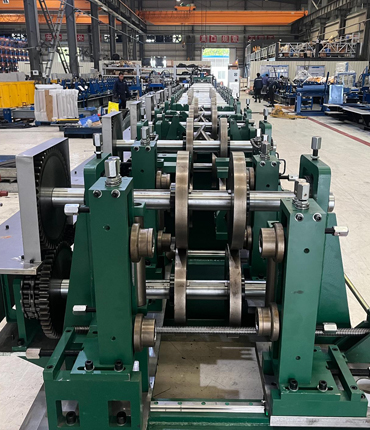
Roll Forming Machine

Roll Forming Machine

This is the core component of the roll forming production line, consisting of multiple rollers.

Each roller station has rollers of different shapes, which progressively alter the geometry of the metal sheet until the desired profile is achieved.

The design of the roll forming machine varies based on the shape and requirements of the product.

Drive System

The drive system provides power to drive the rollers and conveyor systems. It typically uses electric motors with variable frequency drives and automated control systems to ensure the production line runs smoothly and efficiently.

Cutting System

The cutting system is used to cut the formed metal profiles to the required length based on production needs. Common cutting methods include mechanical shearing, laser cutting, or plasma cutting.

Product Collection and
Conveying System

After cutting, the formed metal profiles are automatically conveyed to the product collection area or packaging area via a conveyor belt or roller conveyor.

Automation Control System

The automation control system monitors and controls the production line using sensors, PLCs (programmable logic controllers), and other devices.

It can adjust the production line’s operating conditions in real-time to ensure the precision and efficiency of the roll forming process.

Cooling System

In certain roll forming processes, a cooling system may be necessary to reduce the metal temperature and prevent deformation or instability caused by excessive heat.

Waste Handling System

Waste material is generated during production, and the waste handling system is responsible for collecting, cutting, and processing these materials to reduce waste and recycle usable metal.

What Are the Advantages of the Roll Forming Production Line?

Efficient and Energy-Saving

The roll forming process uses a continuous forming method that completes the metal sheet shaping through multiple rollers. Compared to traditional stamping processes, it significantly increases production efficiency.

Because each station forms a larger portion of the sheet and the process is highly precise, the overall energy consumption is lower, achieving an energy-saving effect.

High Precision, Strong Stability

The roll forming production line uses precise roller settings and an automated control system to achieve high-precision shaping, ensuring that the dimensions and shapes of the metal profiles are consistently accurate.

The stable control at each station reduces production errors, making it ideal for products that require high precision.

Strong Adaptability, Capable of Processing Various Materials and Thicknesses

The roll forming production line can handle different types of metal materials (such as steel, aluminum, stainless steel, etc.) and various thicknesses of sheets. This high adaptability makes the roll forming process widely applicable across industries and capable of meeting custom requirements.

High Automation, Reduced Manual Intervention

Modern roll forming production lines typically feature automated control systems using PLCs and sensors to monitor and adjust the production process in real-time.

This automation reduces manual intervention, improving production efficiency and consistency in product quality.

High Material Utilization, Reduced Waste

Because the roll forming process is continuous and usually requires fewer cutting operations, material waste is minimized.

Compared to traditional stamping or cutting processes, roll forming effectively reduces edge scrap and improves material utilization.

Product Variety, Meeting Diverse Needs

Roll forming technology can manufacture a variety of shapes and sizes, including U, C, Z, Sigma, and other profiles, and even custom structures.

Its flexibility makes it suitable for a wide range of industries, including construction, automotive, and appliances.

Lower Production Costs

Due to the high efficiency and automation of the roll forming production line, it can produce high-quality profiles in large quantities with relatively low labor and energy consumption.

This not only boosts production efficiency but also reduces production costs, making it particularly well-suited for large-scale manufacturing.

Environmental Benefits

The roll forming process generates fewer emissions and wastewater during production, aligning with green manufacturing and environmental regulations.

Its energy efficiency and waste reduction contribute significantly to its environmental advantages, making it compliant with increasingly strict environmental standards.

Simple Maintenance, Long Service Life

The equipment in a roll forming production line is generally designed to be simple, with sturdy construction and long maintenance cycles.

Regular checks and replacement of consumable parts are sufficient, resulting in low overall operational costs and a long service life for the equipment.

Which Industries Are Best Suited for Roll Forming Production Lines?

Construction Industry

In the construction industry, roll forming production lines are mainly used to produce various construction profiles, such as steel roofing, wall panels, stair treads, railings, and decorative trims.

These products typically require good strength, durability, and aesthetics, and roll forming technology provides precise dimensions and consistent quality. Examples include metal roofing panels, cold-formed steel, and wall decorative panels.

Automotive Industry

Roll forming production lines are widely used in the automotive industry to produce body structural parts, chassis components, door frames, bumpers, and more.

Due to its high precision and production efficiency, roll forming can meet the automotive industry’s demand for high-quality and high-volume production. Examples include body exterior panels, door frames, and threshold strips.

Home Appliance Industry

The home appliance industry also utilizes roll forming technology to produce metal enclosures and structural parts, such as external frames, panels, and decorative components for refrigerators, air conditioners, washing machines, etc.

The roll forming process can meet the aesthetic, durability, and high-quality requirements of home appliance products. Examples include refrigerator back panels, air conditioner housings, and washing machine enclosures.

Light Industry

In the light industry, roll forming production lines are used to manufacture light metal components, such as metal furniture, window frames, and door frames.

The roll forming process can produce complex-shaped metal profiles according to different design requirements, meeting the design needs of furniture and windows. Examples include metal window frames, metal door frames, and household metal furniture.

Energy Industry

In the energy industry, especially in renewable energy sectors such as wind and solar, roll forming production lines are used to produce wind turbine towers, solar panel supports, and other structural components.

These products require high strength and corrosion resistance, and roll forming provides high precision manufacturing and efficient material use. Examples include wind turbine tower support structures and solar panel supports.

Transportation Industry

Roll forming production lines are also suitable for the transportation industry, including railways, ships, and aviation, to produce carriages, ship hulls, aircraft components, and other structural parts.

These components require high precision and strength, and roll forming ensures they meet the required standards. Examples include railway carriage frames, ship structures, and aircraft fuselage parts.

Light Steel Structure Industry

Roll forming is widely used in the production of light steel structures, such as steel components for industrial buildings, warehouses, and other structures.

The roll forming process can produce high-strength steel columns, beams, and other structural components.

How to Choose the Right Roll Forming Production Line?

  • Clarify Production Goals and Product Requirements

Define the profile type, size (width, thickness, length), and precision required, especially for industries like automotive or aerospace.

  • Confirm Material Compatibility

Ensure the production line can handle the materials (e.g., steel, stainless steel, aluminum) and thicknesses you’ll use.

  • Evaluate Production Capacity and Efficiency

Check the production speed, hourly output, and stability for continuous operation to meet your production needs.

  • Automation and Control Systems

High automation reduces manual work and improves quality consistency. Choose a line with accurate control systems for optimal efficiency.

  • Equipment Design and Quality

Ensure the equipment design is robust, with high-quality frames and rollers to handle heavy production and reduce wear.

  • After-Sales Service and Technical Support

Good after-sales support, including training and spare parts, helps minimize downtime and operational disruptions.

  • Cost and Return on Investment Evaluation

Consider both initial costs and long-term operational costs to evaluate the line’s ROI and long-term value.

  • On-Site Layout and Safety Considerations

Ensure the equipment fits your space and meets safety standards, including protective covers and emergency stops.

Conclusion

Roll forming production lines have become an inevitable trend in modern manufacturing.

With continuous technological advancements and evolving market demands, investing in and selecting a suitable roll forming production line will help companies improve production efficiency, reduce costs, and meet increasingly stringent environmental standards.

Whether it’s improving product precision, reducing energy consumption, or increasing production capacity, roll forming production lines demonstrate enormous potential.

METOFORM offers highly mature roll forming machines that can perfectly solve any problems you may have in this area. Please visit our product page to find solutions that suit your needs.

FAQs

Q What materials can be used?

The roll forming production line can handle various materials, including carbon steel, galvanized steel, stainless steel, aluminum, and light metal alloys.

Q Can the roll forming production line be customized?

Yes. The roll forming production line can be customized based on different requirements, and companies like VLB can offer tailored solutions for required profiles, thicknesses, and production speeds.

Q Which cutting method is the most suitable?

Dynamic servo control is the ideal cutting method for continuous production, as it precisely controls the cycle speed, achieving higher precision in cutting.

Q Which industries most commonly use roll forming production lines?

Roll forming production lines are widely used in industries such as construction, energy, automotive, logistics, agriculture, and road safety, meeting diverse production needs.

How can we assist you?

Tell us a bit more so we can route your request to the right expert.

    Sign Up For Our Newsletter

    Subscribe to our newsletter for product promos, news, and more.