• Search
  • Language EN

In the rapidly evolving field of warehousing and logistics and industrial racking systems, the demand for efficient, high-quality production equipment is unprecedented. Shelf roll forming machines have become essential equipment for many racking manufacturers.

This article will delve into the working principles, value, market trends, and maintenance of shelf roll forming machines. It will also cover how to select the right equipment for your operations and how to ensure its long-term stable operation.

What is a Storage Rack Roll Forming Machine?

A warehouse racking roll forming machine is a specialized production line. It is primarily used to process flat metal coils or sheets into precision profiles for warehouse racking, racking systems, uprights, beams, support rods, and other support components.

The machine typically includes an uncoiler, a leveling/straightening device, a servo feeder, punching or grooving stations, a roll forming frame, a cutting unit, and often an automated stacker or unloading platform. 
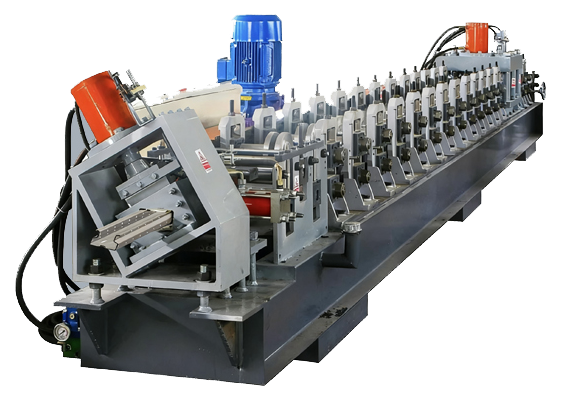
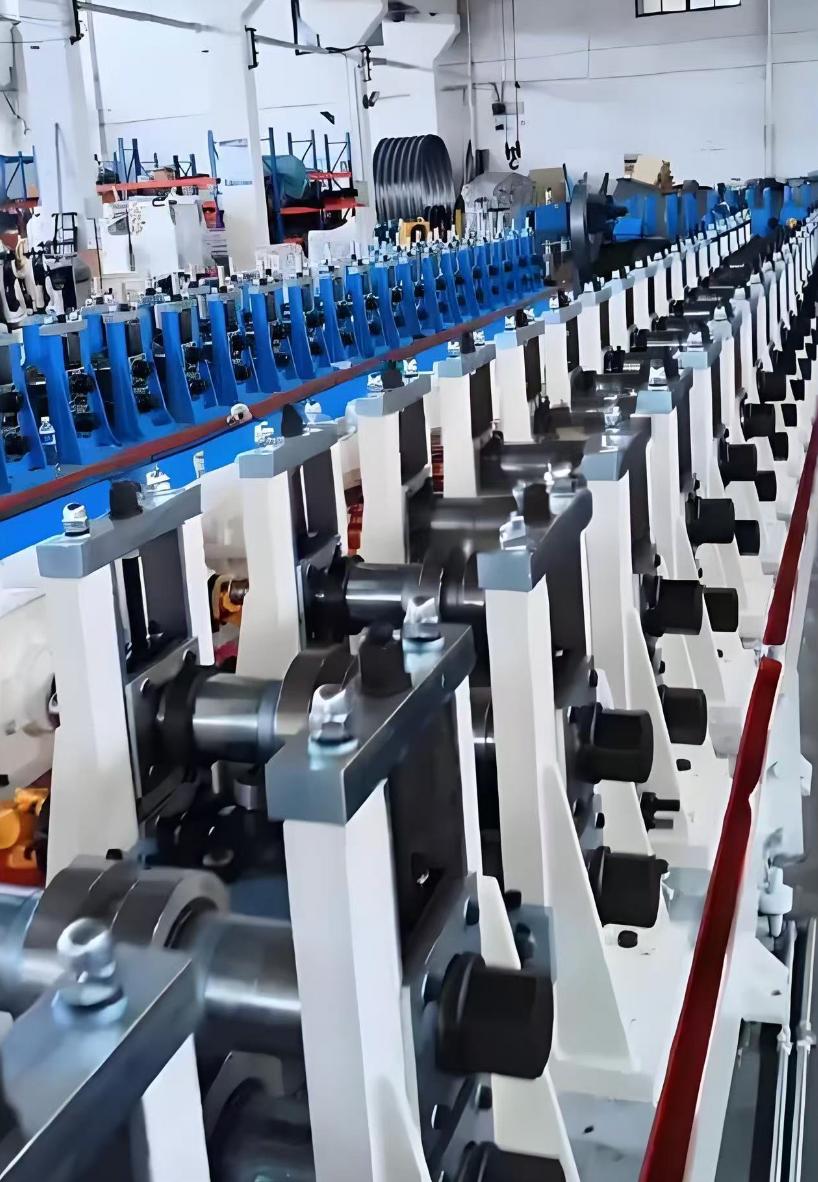
Storage Rack Roll Forming Machine

The roll forming process is continuous: the metal strip passes sequentially through a series of rollers.

At each station, the strip is gradually bent into the designed cross-sectional shape until the final shape is achieved. Afterwards, integrated functions such as punching and cutting are performed to prepare it for subsequent assembly into a warehouse racking system.

Importantly, these machines are optimised for high throughput, consistency, and operational efficiency. They significantly reduce waste, improve dimensional accuracy and quality, and enable cost-effective production of warehouse racking components.

Why Use a Storage Rack Roll Forming Machine?

There are several compelling reasons why manufacturers and storage rack fabricators rely on roll forming machines for rack components:

1. High Production Efficiency & Volume Capability

Because the process is continuous and automated, roll forming machines can process coils of material rapidly, shaping them into shelf beams, uprights, braces, etc., at speeds that traditional methods (cutting, welding, pressing) can’t match.

2. Consistent Dimensional Accuracy & Quality

Roll forming ensures that each component has the same cross-section, uniform holes/grooves, and reliable structural integrity. This consistency is crucial for shelving that needs to withstand heavy loads and meet safety standards.

Consistent Dimensional Accuracy

3. Customisation & Flexibility

Modern roll forming lines are designed with flexibility in mind. They allow for quick change‑over of tooling, adjustments for different widths, thicknesses, hole patterns, or profiles. This is especially useful when producing racks for different industries or when needing small-batch customized runs.

4. Material Waste Reduction & Cost Savings

Because roll forming is a cold‑forming process using coils, scrap is minimized compared to cutting from flat sheets or welding multiple parts. Also, automated and continuous processing reduces labor cost, errors, and re-work.

5. Enabling Storage Industry Growth

As warehousing, e-commerce, retail shelving, and logistics expand globally, the need for efficient shelving production increases. Roll forming machines make it possible to meet that demand with speed, repeatability and scalability.

Current Trends in Storage Rack Roll Forming Machines

As technology and market demands continue to evolve, the following trends are influencing the design, manufacturing, and deployment of warehouse racking roll forming machines:

Intelligent Automation

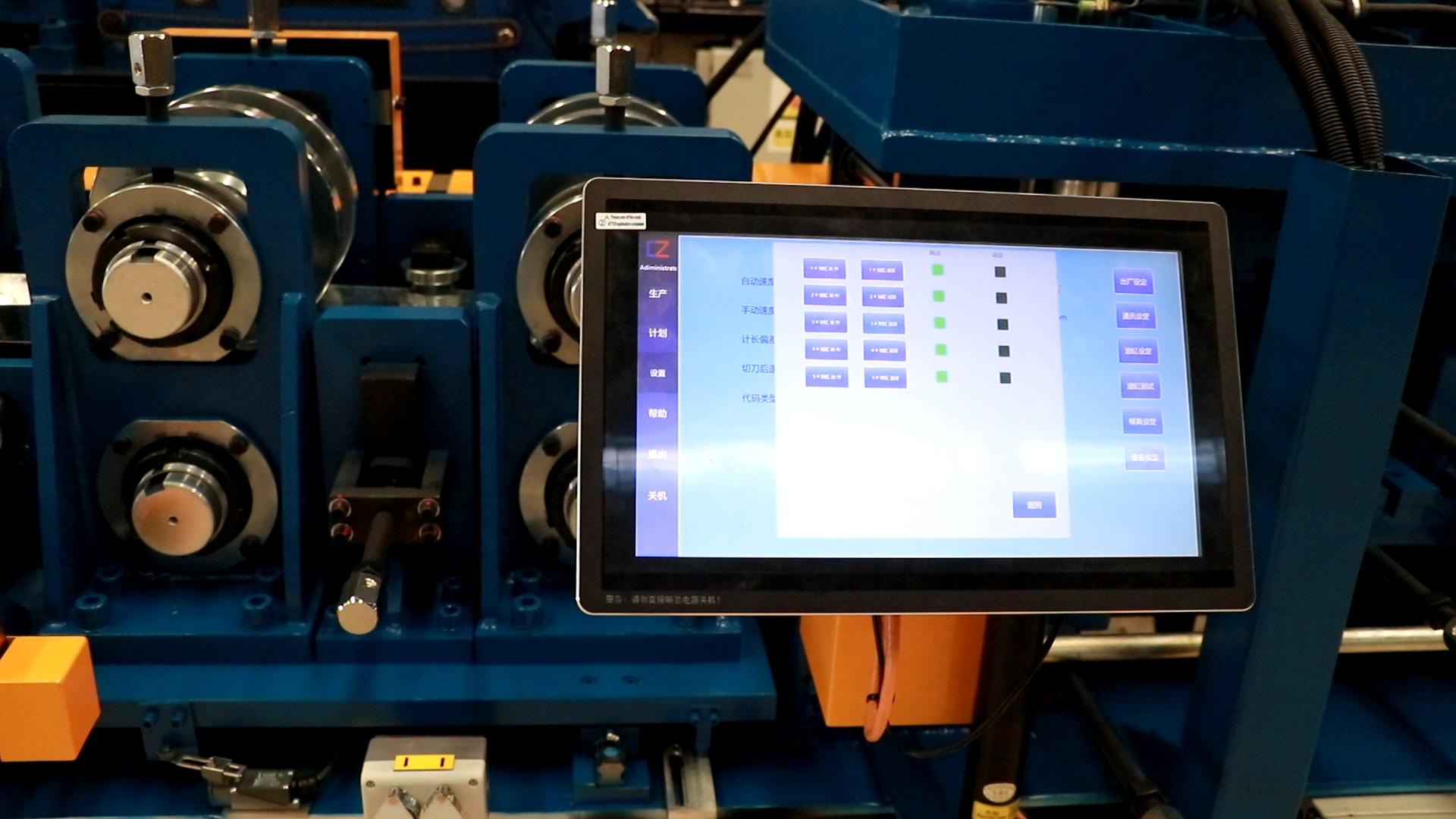
An increasing number of roll forming production lines integrate PC control, servo drives, automatic feeding, tool changing systems, and data monitoring. For example, some machines are equipped with touchscreen interfaces, batch control, and automatic stacking capabilities.

Intelligent Automation

Flexibility for Multi-Profile and Small-Batch Production

Savvy manufacturers are no longer satisfied with machines that can process only one type of profile; they require machines capable of handling multiple profiles, widths, thicknesses, and die types with minimal downtime.

Higher Forming Speeds and Efficiency

Forming speeds continue to increase. With improved dies, precision rollers, and more efficient material handling, an increasing number of racking roll forming production lines are able to deliver higher throughput for heavy-duty profiles.

Wideer Material Selection and Sustainability

Manufacturers offer customization services with a wide range of materials and thicknesses. This supports diverse applications, from heavy-duty industrial racking to light-duty retail racking. Furthermore, manufacturers are placing greater emphasis on intelligent manufacturing, waste reduction, and extended machine lifespan.

Globalization of Supply and Support

As shelving systems are manufactured globally, the roll forming machine market has also become globalized. Chinese and other Asian manufacturers serve global customers with competitive prices, large-scale production capabilities, and robust service networks.

Top Storage Rack Roll Forming Machine Considerations

When evaluating a roll forming machine for shelving production, the following are some key aspects to consider:

1. Material Specifications and Compatibility

  • What types of materials will you be forming (cold-rolled steel, galvanized steel, stainless steel)?
  • What thickness and width range can the machine handle?
  • What yield strength does the machine support? The material needs to meet the structural requirements of the shelving components.

2. Profile and Hole/Slot Customisation

  • What profiles can the machine form (uprights, beams, supports)?
  • Are holes, slots, or notches required? Does it include a punching station?
  • Is it easy to change or adjust dies to accommodate new profiles or different sizes?

3. Production Speed and Output

  • How many meters per minute can the production line produce? Typical production line speeds range from approximately 10-25meters per minute, depending on the complexity of the profiles.
  • What is the expected output?

4. Automation, Control, and Die Change Efficiency

  • What level of automation does the production line employ?
  • How long does it take to change dies when changing profiles? Quick mold changeovers reduce downtime.
  • Is there a user-friendly human-machine interface for batch/recipe management?

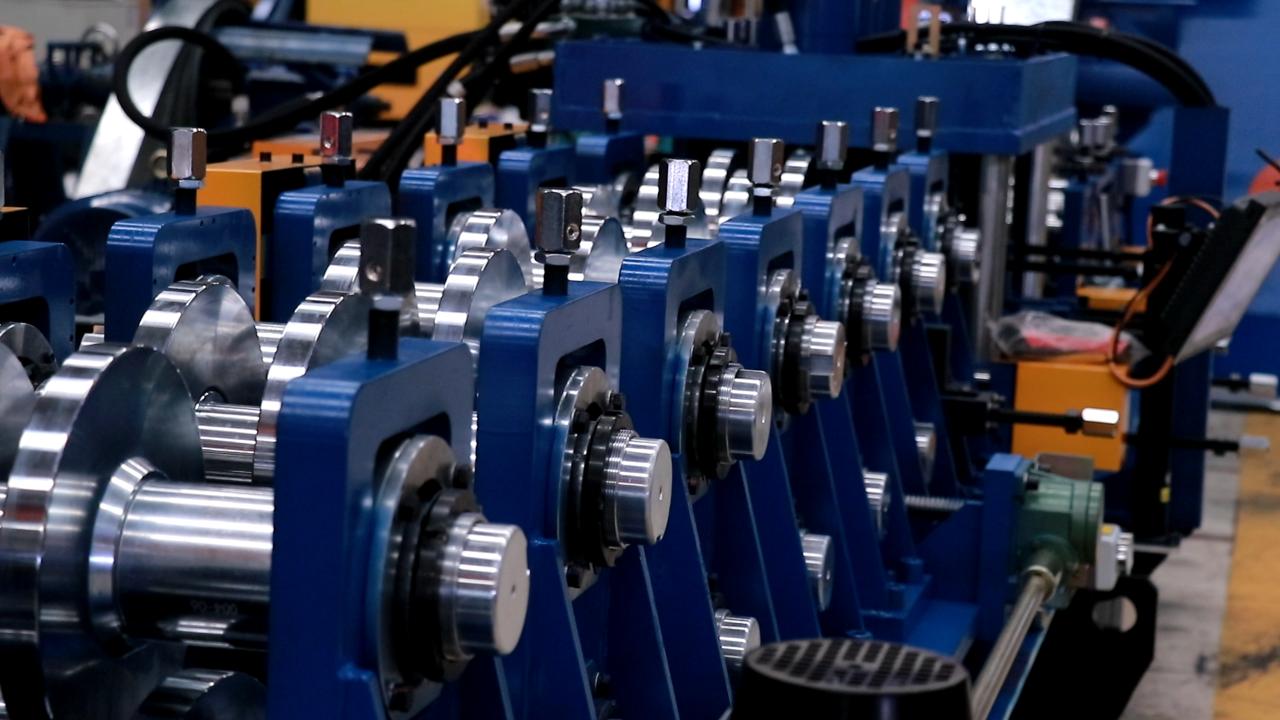
5. Structural Rigidity and Machine Manufacturing Quality

  • The machine must be robust enough to maintain accuracy under continuous operation.
  • Durability, after-sales support, spare parts availability, and machine warranty are all important.
Structural Rigidity and Machine Manufacturing Quality

6. Total Cost of Ownership

  • This is not just the initial purchase price. Consider operating costs (electricity, maintenance), reduced material waste, labor cost savings, and increased production efficiency.
  • A machine that minimizes material waste and labor costs will result in a higher return on investment.

The Applications of Storage Rack Roll Forming Machine

Here are some typical application scenarios where a storage rack roll forming machine adds value:

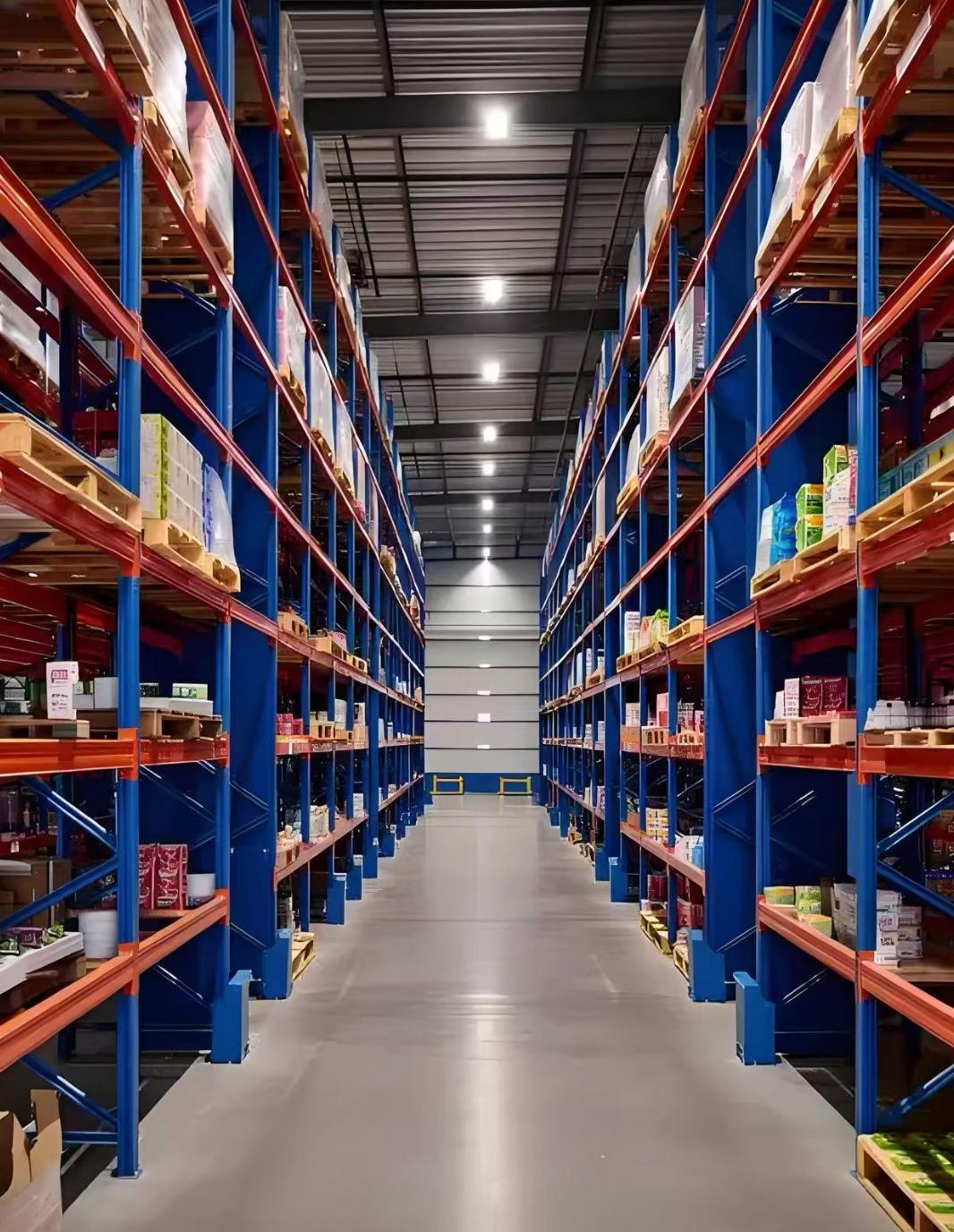
Warehouse & Distribution Centers: These facilities require large quantities of rack components (uprights, beams) that must be reliable, consistent and fast to produce.

Retail Shelving Systems: Store displays and supermarket shelving often require customized sizes, finishes, and decorative features, flexible roll forming lines are ideal.

Applications of Storage Rack Roll Forming Machine

Manufacturing & HeavyDuty Storage: For industrial shelving with high load capacities, thicker materials, and precise punching/slotting are essential; roll forming machines deliver that.

Modular Storage System Providers: Companies that offer modular, adjustable shelving systems benefit from roll-formed uprights and beams that enable rapid assembly and consistent quality.

Maintenance & Best Practices

To ensure your shelving roll forming machine operates efficiently and reliably, here are some best practices for maintenance and operation:

Regular Cleaning and Lubrication: Remove metal shavings, dust, and debris from the machine daily. Lubricate bearings, chains, rollers, and moving parts to reduce friction and wear.

Roller and Die Inspection: Weary rollers or damaged dies will reduce dimensional accuracy. Regular inspection and timely replacement are crucial.

Check Alignment and Leveling: Proper alignment ensures profiles meet tolerances and quality standards. Misalignment can lead to scrap and downtime.

Monitor Electrical and Safety Systems: Ensure sensors, emergency stop buttons, and PLC systems are functioning correctly. Downtime due to control system malfunctions can result in significant costs.

Develop a Preventative Maintenance Plan: Develop a maintenance plan and strictly adhere to it. Maintain a spare parts inventory for consumables.

Train Operators: Even automated machines require skilled operators who understand material handling, machine setup, and die changing.

Why You Should Consider MetoForm’s Storage Rack Roll Forming Machine

If you’re looking for shelving component manufacturing equipment, MetoForm’s “Warehouse Shelving Rollforming Machines” category is ideal for you.

Here’s why:

Product Focus

This category focuses on machines specifically designed for shelving manufacturing, meaning you don’t need to sift through unrelated equipment.

Customization Options

Given the diversity of shelving systems (U-posts, beams, support bars, retail shelving), having a production line capable of supporting multiple profiles is a key advantage.

Scalability

Whether you’re a small business with moderate production volumes or a large factory seeking high capacity, the right rollforming machine can meet your expansion needs.

Efficiency Improvements

Installing a rollforming production line specifically designed for shelving components will reduce waste, lower labor costs, and improve product consistency, thereby increasing profitability.

Conclusion

For any manufacturer of structural racking, racking components, and storage systems, a warehouse racking roll forming machine is an indispensable core piece of equipment. It offers advantages such as speed, precision, flexibility, and cost-effectiveness, which are crucial in today’s competitive warehousing and logistics market.

Whether you are just starting out or upgrading your capacity, the right warehouse racking roll forming machine is a strategic investment that can help you scale up, reduce waste, and provide high-quality storage solutions for your customers.

Sign Up For Our Newsletter

Subscribe to our newsletter for product promos, news, and more.