
Which Metal Panels Fit Low-Slope Metal Roofs?
Low-slope roofs are a common choice for commercial buildings and modern homes because they make efficient use of interior space and create a clean, contemporary appearance.
While some people assume metal roofing is only suitable for steep roofs, metal panels can also perform exceptionally well on low-slope applications when the right system is used.
The challenge with low-slope roofs is water drainage. Because rainwater flows away more slowly than it does on steeper roofs, standing water and wind-driven rain can place greater demands on the roofing system.
As a result, not all metal panels are designed for low-slope conditions. Choosing an unsuitable panel can lead to leaks, premature roof failure, and even warranty issues.
Understanding how different metal roofing systems handle water is essential when planning a low-slope project. In this guide, we’ll explain the key factors that affect performance and help you choose a metal panel system that provides reliable, long-term protection.
What is a low-slope metal roof?
In the construction industry, people express roof slope by the vertical rise in inches over a twelve-inch horizontal run. When a roof slope falls below 3:12, the industry classifies it as a low-slope roof.
This means for every twelve inches of horizontal length, the roof rises less than three inches. From the outside, this type of roof looks almost flat.
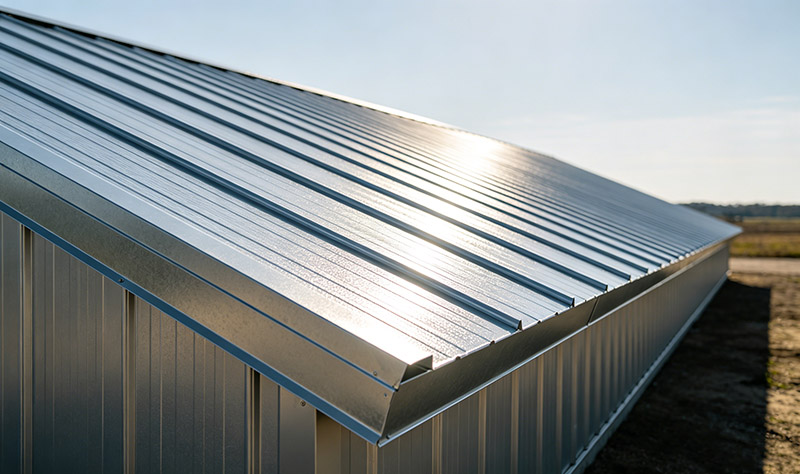
Steep roofs rely on gravity to shed water fast, but low-slope roofs function differently. Because the incline is small, rainwater moves slowly across the surface, which easily creates standing water.
During high winds, the wind can push this sitting water backward up the slope. In cold northern regions, low-slope roofs collect thick layers of snow and ice.
Therefore, a low-slope metal roof cannot rely on simple overlapping panels to keep water out. It demands a fully sealed panel system that provides high air and water tightness through physical barriers.
Can You Install Metal Roofs on Low Slopes?
The answer is yes. You can install metal roofs on low-slope buildings, but you cannot pick just any panel type.
National building codes and the Metal Construction Association set clear technical baselines for low-slope applications. In most scenarios, the absolute lowest limit for a metal roof is a 0.25:12 slope.
This means the roof rises only a quarter of an inch for every twelve inches of horizontal run. If a roof sits below this limit, metal panels cannot drain water, and manufacturers will refuse to provide a warranty.
In practical applications, metal roofing splits into two main categories, and they perform very differently on low slopes.
The first category consists of exposed fastener panels. Installers use screws with rubber washers to drive straight through the metal sheets from above.
Because this process leaves thousands of holes on the roof surface, these panels struggle against standing water. This panel type demands a slope of 3:12 or at least 2:12. If you force these panels onto a lower slope, trapped water easily seeps through the screw holes into the building interior.
The second category is the concealed fastener standing seam system. This system keeps the roof surface free of holes, and the panels lock together through special folding methods.
This unique structure provides strong resistance against leaks, allowing it to perform well on slopes as low as 0.25:12. This makes it the primary option for low-slope structures.
Selecting the Right Low-Slope Option for Your Metal Roof
If your building falls into the low-slope category, you must match your panel selection to the exact slope measurements of your project.
Slopes Between 2:12 and 3:12
In this range, you have more flexibility. You can use snap-lock standing seam panels. These panels attach to the roof deck using hidden clips underneath, and the edges lock together with light pressure or a mallet.
Although this method avoids complex mechanical seaming, this low incline means you must apply butyl sealant tape inside the overlapping joints during installation. This continuous line of sealant acts as the main defense against wind-driven water backing up into the seams.
Slopes Between 0.25:12 and 2:12
Once the slope drops below 2:12, you must eliminate snap-lock panels and exposed fastener panels from your options. At this stage, your safe path involves mechanically seamed standing seam panels.
Installers use a specialized electric seamer to mount these panels. The machine moves along the panel joints, bending the edges of adjacent metal sheets together in a 180-degree or 360-degree double fold.
This process physically stitches all the panels into a single unit. Combined with the factory-applied sealant inside the joints, the entire roof behaves like a continuous metal skin. Even if heavy storms cause water to sit on the surface for a short time, it cannot penetrate the barrier.
How Do You Choose the Right Low-Slope Option for Your Metal Roof?
When you are dealing with a low-slope roof, picking the right material makes all the difference. This is exactly how you ensure the whole structure stays solid and holds up for decades.
Snap-Lock Standing Seam
Snap-lock panels are a great fit if your roof has a pitch of 3:12 or higher and you live in a relatively mild climate. They give you the sleek look of a standing seam roof but keep things simple, allowing for a much easier installation that bypasses the need for heavy mechanical seaming tools on-site.
Mechanically Seamed Standing Seam
For a low 1:12 pitch, a mechanically seamed system works wonders. It creates an ultra-tight barrier that handles heavy storms easily, so it won’t let you down in freezing temperatures or harsh environments.
7.2 Panels
For a pitch of 1:12 or more, 7.2 panels offer a practical, hard-wearing setup without the heavy price tag. They work wonderfully for simple, hands-on builds, ensuring you get a solid low-slope roof along with plenty of flexibility when it comes to picking a color.
R-Panels
If you’re on a tight budget, R-panels handle a 1:12 pitch beautifully. They are highly budget-friendly, simple enough to install yourself without any hassle, and still come in a wide variety of colors to match your style.
The Mandatory Underlayment Defense Line
No matter how advanced your standing seam panels are, low-slope roofs always need a double safety measure. Before laying down the metal panels, installers must cover the entire roof deck with a high-quality, self-adhering ice and water shield.
This underlayment acts as a backup layer. If extreme weather causes a minor leak in the metal sheets, the waterproof underlayment stops moisture from damaging the wood structure or entering the rooms below.
Conclusion
Following building codes and manufacturer technical guides represents the only way to ensure success with a low-slope metal roof.
Every engineering detail, from exact slope measurements to the execution of mechanical seaming, dictates the lifespan of the roof. Just as quality buildings rely on precise panel seams to maintain tight seals, modern industrial systems depend on high standards in connection technology.

If you are planning a low-slope metal roof project or need professional industrial parts support, reach out to our technical expert team to get customized consultations and product quotes.

Product Recommendation


How can we assist you?
Tell us a bit more so we can route your request to the right expert.
Sign Up For Our Newsletter
Subscribe to our newsletter for product promos, news, and more.