
What Is an EPS Sandwich Panel Production Line?
As demand for energy efficient buildings continues to grow, EPS sandwich panels are being used more widely in industrial plants, cold storage projects, commercial buildings, and prefabricated construction.
At the same time, market expectations for panel quality, production efficiency, and equipment stability are becoming higher.
In this context, a clear understanding of the structure, process flow, application scope, and production optimization methods of an EPS sandwich panel production line can help manufacturers improve their production standards and respond better to changing project needs.
What Is an EPS Sandwich Panel Production Line
An EPS sandwich panel production line is an automated system used for manufacturing insulated composite panels. It combines metal sheets with EPS foam cores through a continuous laminating process, forming building materials with low weight, high strength, and good thermal insulation performance.
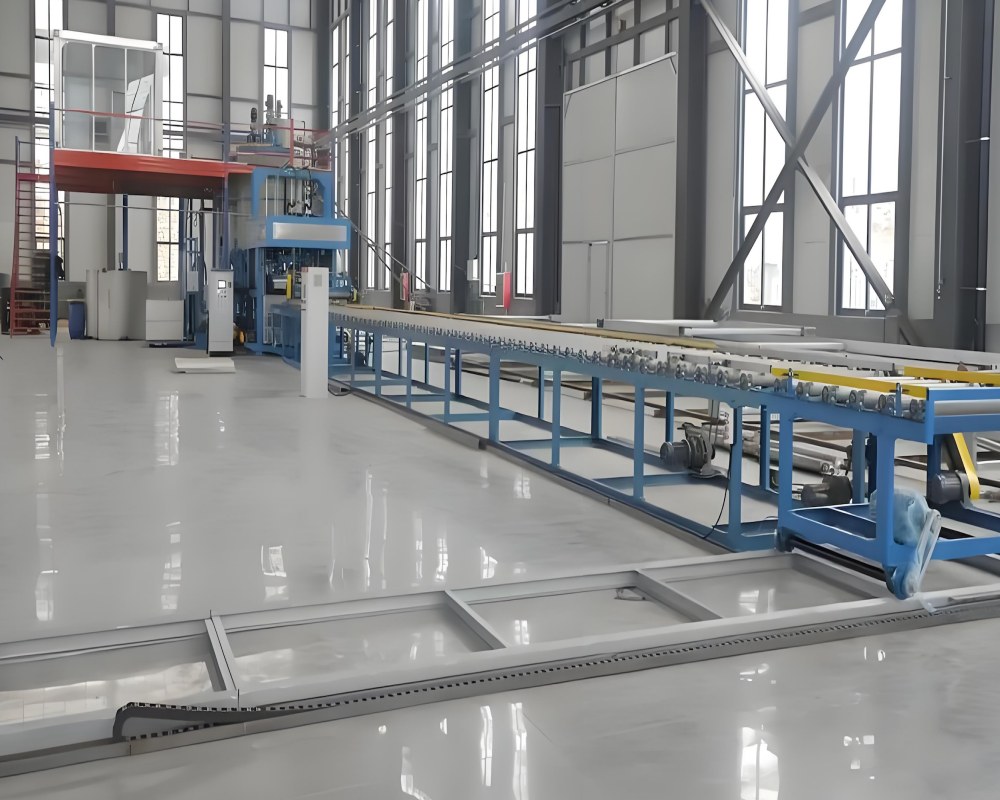 This type of production line usually operates in a continuous mode. With integrated machinery and control systems, it completes processing from raw materials to finished panels in one line. This approach improves production efficiency and reduces instability caused by manual operations.
A complete EPS sandwich panel production line usually includes the following modules:
- Uncoiling and feeding system for steel coils
- Roll forming system for shaping metal sheets
- EPS core feeding and conveying system
- Double belt laminating system for pressing and curing
- Automatic cutting system for precise sizing
- Stacking and conveying system for finished panels
- PLC control system for full line automation
All systems work together under precise control to keep product quality stable during continuous production.
EPS Sandwich Panel Production Process
The production of EPS sandwich panels follows a continuous composite manufacturing process. Each stage has a direct impact on the final product performance.
1. Metal Sheet Forming
Steel coils are uncoiled and fed into the roll forming machine. The sheets are shaped into required profiles based on product specifications. This step affects both appearance and structural strength.
2. Core Filling and Positioning
EPS foam is used as the insulation core and is evenly placed between the upper and lower metal sheets. Its density and uniform distribution influence thermal performance and overall strength.
3. Laminating and Pressing
The panels pass through a double belt system for continuous pressing. Bonding and curing take place under controlled temperature and pressure. This stage determines the structural stability of the panel.
4. Cutting and Output
After lamination, panels are cut to preset lengths and transferred to the stacking system. The full process supports continuous production and suits large scale manufacturing.
 Core Advantages of EPS Sandwich Panel Production Line
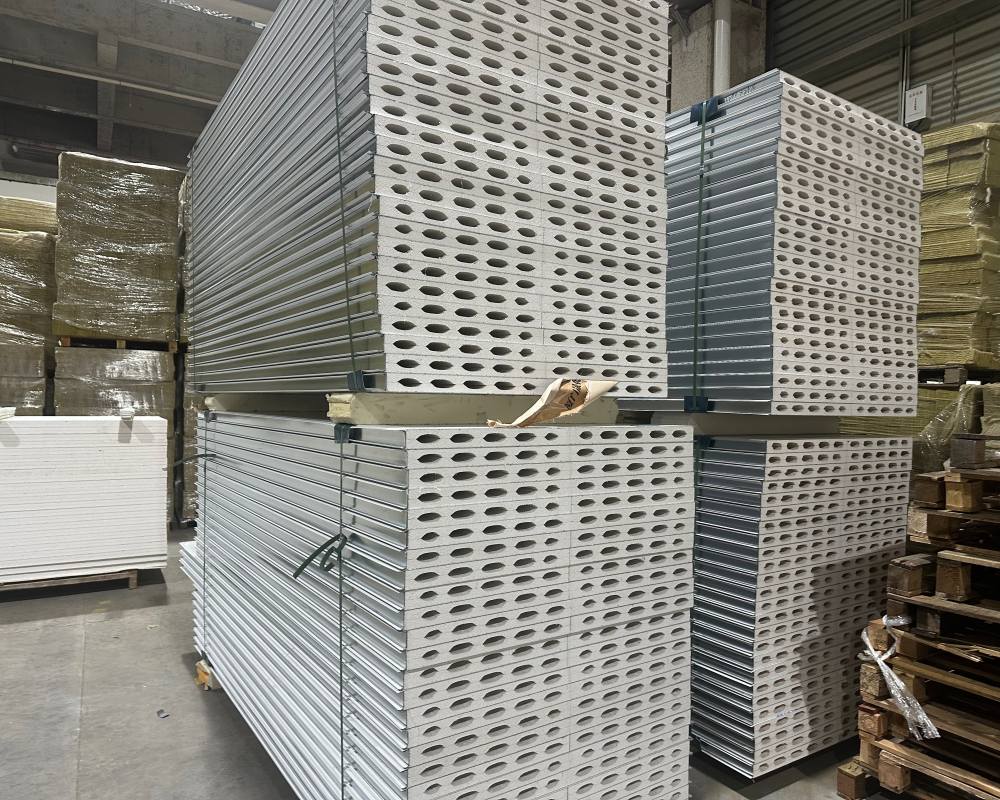 Core Advantages of EPS Sandwich Panel Production Line
An EPS sandwich panel production line is widely used in modern manufacturing because it offers clear advantages in output, product quality, production cost, and specification flexibility. For manufacturers, these advantages support more stable production and a broader range of market applications.
High Efficiency Continuous Production
- Continuous operation replaces traditional intermittent production
- Stable production rhythm increases output per unit time
- Suitable for large scale manufacturing with consistent demand
High Product Consistency
- Automated systems control temperature, pressure, and speed with accuracy
- Reduced manual variation during production
- Panels maintain stable dimensions and performance
Strong Cost Performance
- Improved material utilization reduces waste
- Lower labor input due to automation
- Higher efficiency helps reduce unit production cost
Flexible for Multiple Specifications
- Panel thickness, width, and core parameters can be adjusted
- Suitable for different project requirements
- Supports product diversification and market expansion
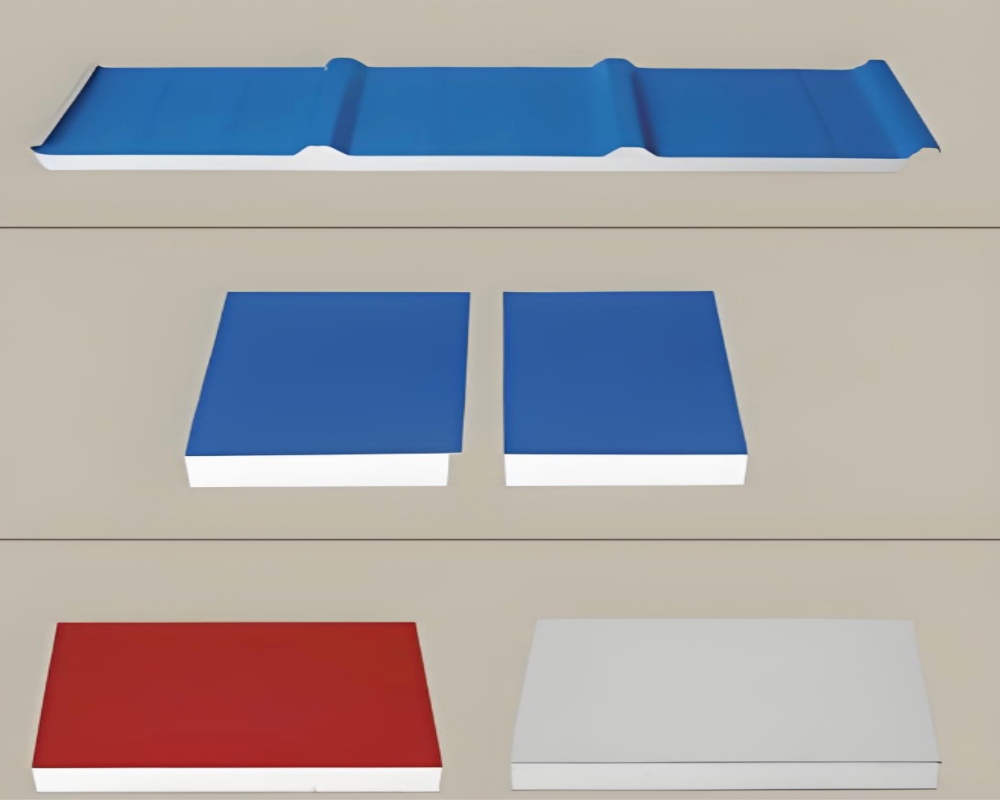
Main Application Areas of EPS Sandwich Panels
With the development of industrialized construction, EPS sandwich panels are used across multiple sectors. Their application continues to expand as more industries adopt standardized building methods and faster construction approaches.
In the construction field, they are widely used in industrial buildings, commercial structures, and residential projects. They serve as wall and roofing materials and help improve energy efficiency by reducing heat transfer and maintaining stable indoor conditions.
In cold chain and storage, they are applied in cold rooms, refrigerated facilities, and temperature controlled warehouses. Their insulation performance supports stable internal conditions and helps reduce energy consumption during long term operation.
In prefabricated buildings, they are used in modular houses, container houses, and temporary structures. Their light weight and simple installation help shorten construction time and reduce on site labor requirements.
They are also used in clean rooms in industries such as food processing, pharmaceuticals, and electronics. In these settings, they are applied in partition systems to maintain controlled environments and meet hygiene standards.
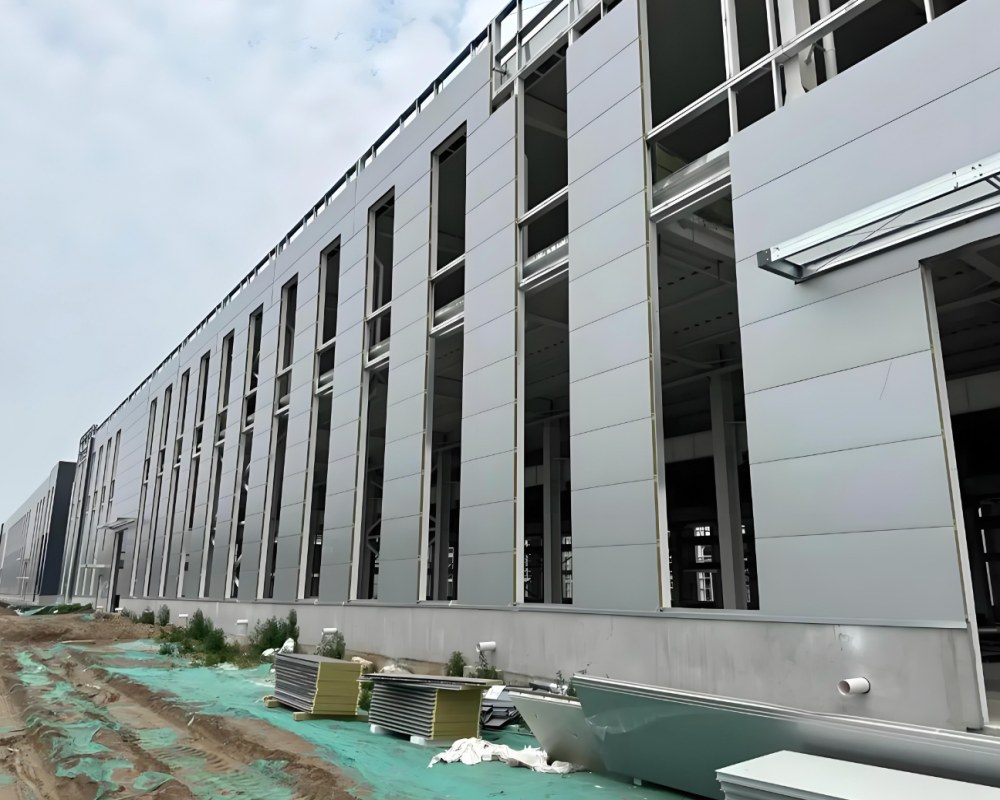
How to Optimize EPS Sandwich Panel Production
In a competitive market, process optimization helps improve overall performance.
Improve Line Coordination and Stability
Equipment across the line should run at matched speeds and parameters. Mismatch can cause material accumulation or uneven stretching, which affects product quality.
Refine Process Parameter Control
Key parameters include:
- EPS density and uniformity
- Adhesive ratio and coating uniformity
- Pressing temperature and pressure
- Line running speed
Managing these parameters with data helps improve product stability.
Introduce Smart Monitoring Systems
Modern production lines use data collection and monitoring systems to analyze production in real time and support fast adjustments.
Improve Operation and Maintenance
Even with automation, proper operation and maintenance remain necessary. Regular training and standardized procedures help reduce failure rates.
Future Development Trends
With the growth of green building and smart manufacturing, EPS sandwich panel production lines continue to upgrade. Production equipment is moving toward higher automation with data based control and remote management.
Energy saving and environmental performance are receiving more attention through reduced energy consumption and better material usage. At the same time, panel materials are improving in strength, fire resistance, and functional integration to meet higher construction standards.
Conclusion
EPS sandwich panel production lines have become a widely used solution in modern building material manufacturing due to their efficiency, stability, and flexibility. Continuous improvement in process control and automation helps manufacturers improve product quality and competitiveness.
If you are looking for reliable and efficient EPS sandwich panel production equipment or a complete solution, please contact us. We will reply as soon as possible and provide professional support and customized solutions.

Product Recommendation


How can we assist you?
Tell us a bit more so we can route your request to the right expert.
Sign Up For Our Newsletter
Subscribe to our newsletter for product promos, news, and more.