
Light Gauge Steel Framing: A Practical Guide for Builders and Developers
Wood prices swing. Skilled framers are harder to find. Construction timelines stretch past deadlines. More builders are asking the same question: is there a better way to frame a building?
Light gauge steel framing has been the answer in Australia, Europe, and parts of Asia for decades. Now it is growing fast in North America.
Metoform manufactures roll forming machines that produce LGS framing components for residential, commercial, and industrial projects. This guide explains what LGS framing is, how it compares to traditional methods, and what you need to know before making the switch.
What Is Light Gauge Steel (LGS) Framing
Light gauge steel framing uses thin sheets of galvanized steel, typically 0.5mm to 3mm thick, that are cold-rolled into structural shapes. These shapes, called profiles, include studs, tracks, channels, and joists.
They replace the wooden two-by-fours and two-by-sixes in a traditional stick-built wall or floor system. The steel arrives at the construction site as pre-cut, pre-punched components.
Builders screw or bolt them together on site, or in some cases, assemble entire wall panels in a factory and ship them ready to install.
The term cold-formed means the steel is shaped at room temperature by passing it through a series of rollers. No heat is applied. The cold-working process actually increases the steel’s yield strength.
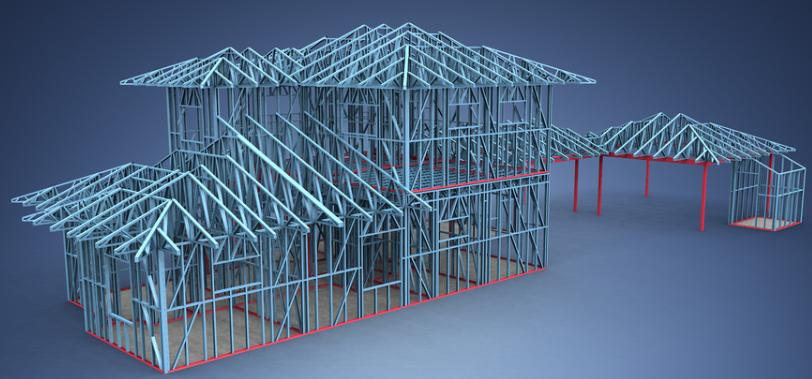
How LGS Framing Is Produced: From Steel Coil to Building Component
The Roll Forming Process
A coil of galvanized steel sits at one end of a roll forming machine. The steel strip feeds through a series of roller stations. Each station bends the strip a little more than the last. By the time the steel exits the machine, it has been formed into a precise C-shaped stud or U-shaped track.
An in-line punching system adds holes for plumbing, electrical conduit, and bracing while the steel is still moving.
A flying cutoff saw slices each piece to the exact length specified by the design software. The entire process is automated. A single machine can produce hundreds of linear feet of framing per hour.

From Machine to Building Site
The output from the roll forming machine is a bundle of labeled, cut-to-length steel profiles. Each piece matches a specific location in the building plan. The labels tell the framing crew exactly where each stud and track goes.
This system eliminates on-site cutting, reduces waste to near zero, and speeds up framing by 30 to 50 percent compared to traditional wood framing. The precision of machine-cut steel also means walls are straighter, floors are flatter, and drywall installers spend less time shimming.


Key Advantages of Steel Framing Over Traditional Wood
Dimensional Stability
Wood expands and contracts with changes in humidity. It can warp, twist, or bow between the time it leaves the lumber yard and the time it gets nailed into a wall.
Steel does none of these things. It stays straight regardless of weather. Floors do not squeak. Drywall does not crack at the seams from frame movement. Callbacks for these issues are rare with steel framing.
Fire Resistance and Pest Protection
Steel does not burn. In a fire-rated assembly, steel framing combined with the right gypsum board can achieve one-hour, two-hour, or higher fire ratings.
Termites and carpenter ants do not eat steel. In regions where these pests are common, switching to steel eliminates the cost of chemical soil treatments and ongoing inspections.
Speed and Waste Reduction
Because the roll forming machine cuts every piece to length at the factory or on the job site, there is almost no waste. Wood framing typically generates 10 to 15 percent waste in the form of offcuts. Steel framing waste is under 2 percent.
Fewer dumpster hauls, less material cost. Labor savings come from the labeling system. The framing crew works from a plan that tells them exactly where each numbered piece goes. No measuring, no cutting, no guessing.
Comparing LGS to Other Building Materials
Against wood, LGS framing wins on consistency, fire resistance, and pest resistance.
It costs more per linear foot than wood at current prices, but the total installed cost is often comparable when you factor in reduced waste, faster framing, and fewer callbacks. Against concrete and CMU block, LGS framing is much lighter.
A steel-framed wall weighs a fraction of a concrete block wall, which reduces foundation requirements and seismic loads.
Against hot-rolled structural steel, LGS is for non-load-bearing and light load-bearing applications. It is not a replacement for heavy I-beams and columns. It is the framing that fills in between them.
Common Types of Cold-Formed Steel Profiles
Studs and Tracks
C-shaped studs are the vertical members in a wall. They have a web, two flanges, and small return lips that add stiffness. U-shaped tracks run along the top and bottom of the wall. The studs slide into the tracks and get screwed in place. This is the basic building block of any LGS wall system.
Joists, Channels, and Headers
Floor joists use deeper C-shaped sections designed to span longer distances. Furring channels are shallow hat-shaped sections used to attach drywall to masonry walls or to create a space for insulation.
L-shaped headers bridge over door and window openings. Each profile type is produced on the same roll forming machine by changing the roller tooling or adjusting the machine settings.

Where LGS Framing Is Used: Residential, Commercial, and Modular
Residential Construction
Single-family homes, townhouses, and low-rise apartment buildings are the fastest-growing market for LGS framing in North America. Builders who switch cite straighter walls, fewer weather delays, and the ability to frame in winter without worrying about wet lumber freezing or warping.
Commercial and Modular Construction
Hotels, student housing, and assisted living facilities use LGS framing for interior partitions and load-bearing walls. Because the framing is dimensionally stable, modular manufacturers can build entire room units in a factory with tight tolerances and ship them to the site.
The steel frame handles transport vibration better than wood. Curtain wall systems on mid-rise and high-rise buildings use LGS as the backup framing behind the exterior cladding.
Design Considerations for Steel Frame Projects
Steel conducts heat more readily than wood. A steel-framed wall needs a continuous layer of exterior insulation to prevent thermal bridging. This adds material cost but also improves the overall R-value of the assembly.
Steel framing has different acoustic properties than wood. Sound travels through steel more easily, so acoustic isolation requires resilient channels or sound-damping compounds between the studs and the drywall.
Both thermal and acoustic design are well understood and documented in building codes. They are not problems. They are design requirements that need to be included in the plans from the start, not retrofitted later.
Common Concerns About Steel Framing and the Real Answers
Is Steel Framing More Expensive Than Wood?
Per linear foot, yes. But when you add up faster framing, near-zero waste, fewer callbacks, and lower insurance premiums because steel does not burn, the total project cost is often comparable.
Studies from the Steel Framing Alliance have shown that the installed cost of steel framing can be within 5 percent of wood when all factors are considered.
Does Steel Rust?
Galvanized steel used in LGS framing has a zinc coating that prevents rust. In normal interior and protected exterior applications, the coating lasts the life of the building.
In coastal or high-humidity environments, a heavier galvanized coating or supplemental protective treatment may be specified. This is a standard material specification decision, not a reason to avoid steel.
How to Choose a Roll Forming Machine for LGS Production
If you are a builder considering bringing LGS production in-house, the roll forming machine is the single largest investment. Look for a machine that can produce multiple profile sizes without changing tooling. Automatic size adjustment saves hours of downtime between job setups.
Check the punching capability. The machine should punch service holes, bracing holes, and connection slots in-line without a separate step. Ask about the design software.
The machine should integrate with software that takes a 3D building model and outputs cut lists and labels directly to the production line. This integration is where the real efficiency comes from. Without it, you have a fast machine feeding a slow process.
Explore Metoform light gauge steel framing machines for automated production of C, U, and floor joist profiles.
Metoform Light Gauge Steel Framing Solutions
Metoform manufactures automated roll forming machines for light gauge steel framing production. Our machines produce C-studs, U-tracks, floor joists, and custom profiles in gauges from 0.5mm to 3mm.
Features include automatic profile size switching, in-line punching for service holes and bracing, and integration with 3D building design software. We provide training, installation support, and ongoing technical service to help builders and manufacturers bring LGS production in-house.

Frequently Asked Questions
Q1 What is the difference between cold-formed steel and hot-rolled steel?
Cold-formed steel is shaped at room temperature by rolling thin sheet steel through a series of rollers. Hot-rolled steel is shaped while the steel is red-hot. Cold-formed steel is lighter and used for framing. Hot-rolled steel is heavier and used for beams, columns, and structural steel frames.
Q2 Can LGS framing be used for load-bearing walls?
Yes. Cold-formed steel studs and tracks are engineered for both load-bearing and non-load-bearing applications. The stud gauge, depth, and spacing are determined by the structural engineer based on the loads the wall needs to support.
Q3 How long does a steel-framed building last?
A properly designed and constructed steel-framed building can last 50 to 100 years or more. The galvanized coating prevents corrosion. Steel does not rot, warp, or get eaten by insects. The limiting factor is usually the cladding and roofing, not the steel frame itself.
Q4 Is steel framing allowed by building codes in the United States?
Yes. The International Building Code and International Residential Code both include prescriptive and engineered provisions for cold-formed steel framing. Steel framing has been code-compliant for decades.
Q5 How fast can a roll forming machine produce LGS framing?
A typical automated LGS roll forming machine can produce 300 to 600 linear feet of finished framing per hour, depending on the profile complexity and punching requirements. One machine can supply framing for multiple construction crews.
Q6 Where can I buy LGS roll forming machines?
Metoform manufactures a range of light gauge steel framing machines with automatic profile switching, in-line punching, and integrated design software. Contact us for machine specifications and pricing.
Explore LGS framing machine solutionsExplore LGS framing machine solutions
Contact Metoform for a quoteContact Metoform for a quote


How can we assist you?
Tell us a bit more so we can route your request to the right expert.
Sign Up For Our Newsletter
Subscribe to our newsletter for product promos, news, and more.