
How to Compare Angle Iron Roll Forming Machine Suppliers
Angle iron is everywhere in steel construction. Transmission towers, shelf racks, solar panel frames, cable trays, and structural bracing all use angle profiles. If your business fabricates or distributes steel angles, buying a roll forming machine is a major capital decision. Pick the wrong supplier and you spend years working around missing features, slow changeovers, or absent support. Metoform manufactures angle iron roll forming machines for steel processors worldwide.
This guide walks through the comparison criteria that actually matter when two suppliers quote similar-looking machines at different prices.
Define Your Product Range Before Comparing Machines
Equal Angle, Unequal Angle, and Special Profiles
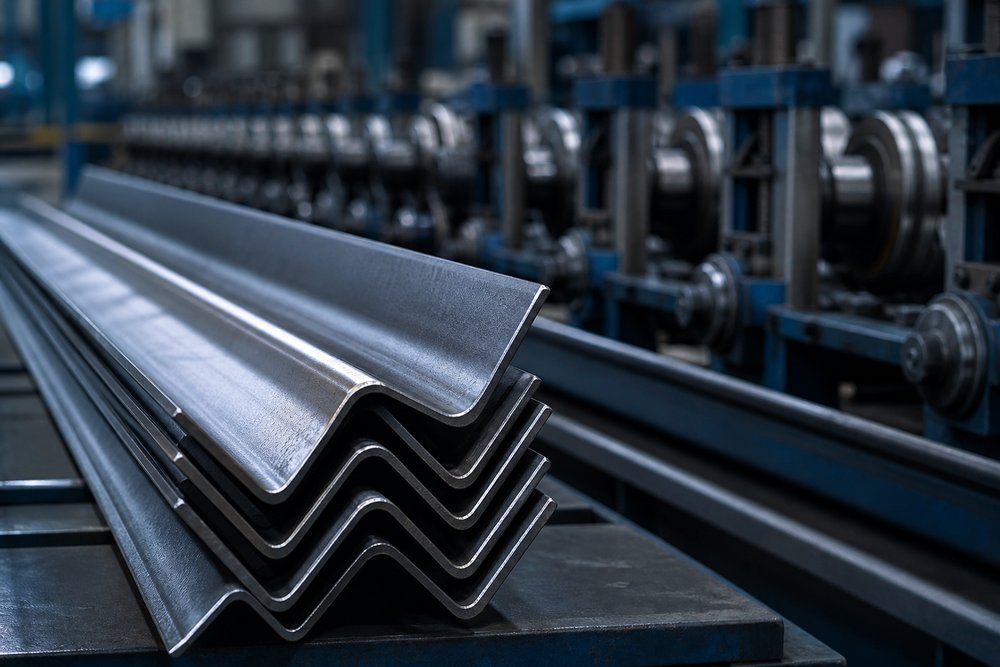
The first decision is what your customers actually order. Equal leg angles, where both sides are the same length, represent the bulk of the market. Unequal leg angles, with different leg lengths, are used where load conditions are asymmetric. Some angle lines also produce channels, flat bars, and custom shapes. A machine that makes only equal leg angles costs less. A machine that also handles unequal angles and channels costs more. The difference is not just in the roller tooling. The frame needs to be stiffer. The guiding system needs to accommodate strip widths that change between legs. The cutoff needs to handle asymmetrical shapes. If 80 percent of your orders are equal leg angles, a dedicated machine may be the right call. If your market demands mixed profiles, buy the flexibility upfront.
What Sizes Do You Need Today, and What Sizes Might You Need Later
Angle iron machines are defined by their leg width range, typically 20mm to 100mm for standard machines. Heavy-duty models go to 150mm or 200mm leg width. Thickness range is usually 1.0mm to 4.0mm or 5.0mm. A machine rated for 3.0mm maximum thickness cannot suddenly run 4.0mm if a customer asks for it. At best, it produces out-of-tolerance angles that get rejected. At worst, it damages the rollers. Buy the gauge range that covers your market’s heaviest angle specification, not your average. The cost difference between a 3.0mm and a 4.0mm machine is smaller than the cost of turning away orders for three years.
Key Specs: Thickness, Width, Speed, and Hole Punching
The Specs That Drive Production Output
Speed is measured in meters per minute. A standard angle iron machine runs at 10 to 25 meters per minute. The headline speed number is for the thinnest gauge in the simplest profile. At 4.0mm, the same machine runs at half that speed or less. Ask every supplier for their speed-at-gauge chart. Two machines that both claim 20 meters per minute may have very different real-world throughput. Leg width matters for throughput less than gauge. Wider angles use more steel per meter but do not necessarily run slower. What runs slower is heavier gauge, which needs more forming force per station. Look at how many forming stations each machine has. More stations mean more gradual forming, which means higher speed at heavy gauge. A 12-station machine running 4.0mm will be noticeably faster than an 8-station machine running the same material.
Hole Punching: In-Line or Secondary Operation
Angle iron sold for racking systems, transmission towers, and solar frames almost always needs punched holes. Bolt holes, slot holes, and mounting holes. An in-line punching system adds these holes while the steel moves through the roll forming line. The alternative is a separate punching station after the roll former. That means a second operator, a second machine, and the risk of hole positions shifting because the angle has been cut to length and can rotate in the fixture. In-line punching is more expensive but eliminates the secondary operation entirely. If more than 30 percent of your angle output requires holes, in-line punching pays for itself within the first year through labor savings alone.
After-Sales Support: What Separates Good Suppliers From the Rest
Installation, Training, and Remote Support
A roll forming machine is not a plug-and-play purchase. It arrives in pieces. It needs leveling, alignment, electrical connection, and hydraulic commissioning. A supplier who sends technicians to your facility for installation and initial training is delivering a working production line. A supplier who ships the machine with a manual and a video link is delivering a project that your team has to finish. Installation and commissioning typically take two to four weeks with supplier technicians on site. Without them, it can take two to three months and the machine may never run at its rated accuracy. Ask every supplier to include on-site commissioning in the quote. If one quote is significantly cheaper, check whether installation and training are included or sold separately.
Spare Parts Availability Over the Machine’s Lifetime
Roller sets wear. Shear blades need sharpening. Hydraulic seals leak eventually. Every machine needs spare parts. The question is how long you wait for them. A supplier with a regional spare parts warehouse ships replacement rollers in days. A supplier that builds every roller set to order from a factory on another continent ships in weeks or months. Factor this into the total cost of ownership. A machine that is down for four weeks waiting for a replacement roller has erased several months of profit. Ask about lead times for the top five wear parts: forming rollers, shear blades, hydraulic pump seals, guide rollers, and control system components. Get the lead times in writing as part of the purchase agreement.

Factory Visit Checklist: What to Look For
Before You Book the Flight
A factory visit tells you things a brochure cannot. It tells you whether the supplier is a manufacturer or a trading company that outsources production. It tells you the quality of their machining, their assembly process, and their quality control. Before the visit, ask the supplier to run a demonstration of the exact machine configuration you are buying. Bring your own steel coil if possible, in the gauge and grade you plan to run. Do not accept a demonstration with thinner steel than your production requirement. Watch the machine run at full speed for at least 30 minutes. Look for vibration in the frame. Listen for roller chatter. Check the cut quality on the first and last piece of the run. Consistent quality across a 30-minute run is harder to fake than three sample pieces.
What to Inspect on the Factory Floor
Look at the roller material. Good rollers use hardened tool steel, typically Cr12MoV or equivalent, heat-treated to HRC 58-62. Soft rollers wear faster and lose profile accuracy. Look at the frame construction. A welded steel frame with machined mounting surfaces holds alignment better than a bolted-together frame. Look at the electrical cabinet. Is it neatly wired with labeled terminals, or is it a nest of unmarked cables that no maintenance technician can troubleshoot? Look at the machines they are building for other customers. A clean, organized factory floor with machines in various stages of assembly tells you this is a production operation, not a shop that builds one machine at a time.
Total Cost of Ownership vs Purchase Price
The Purchase Price Is the Smallest Number
A roll forming machine runs for 10 to 20 years. Over that period, the purchase price is a fraction of the total cost. Energy consumption, spare parts, downtime, and operator labor add up to far more. A machine that costs $80,000 and runs at 85 percent uptime for 15 years costs less per meter of angle produced than a machine that costs $60,000 and runs at 65 percent uptime. The cheap machine also misses more delivery deadlines, which costs you customers. Make a simple spreadsheet. Estimate your annual production in tons. Multiply by the cost per ton of downtime, scrap, and rework. Run the numbers for each machine you are comparing. The machine with the higher upfront price is often the cheaper option over five years.
Energy, Labor, and Consumables
The main consumables are roller sets, shear blades, and hydraulic oil. Roller sets last 500,000 to 2,000,000 meters of production depending on steel gauge and roller material. Shear blades last 100,000 to 500,000 cuts before sharpening or replacement. Get the expected service life and replacement cost for these items from each supplier. Labor is usually one operator per shift for a fully automated line with in-line punching and automatic stacking. Two operators if manual stacking is required. Energy consumption comes from the main drive motor, hydraulic pump, and decoiler motor. A typical angle iron line draws 30 to 75 kW depending on size and speed. Check the motor ratings in the specification sheet. Bigger motors mean faster heavy-gauge production but higher electricity cost per hour.
Metoform Angle Iron Roll Forming Solutions
Machine Range
Metoform builds angle iron roll forming machines for equal and unequal leg angles in leg widths from 20mm to 150mm and thicknesses from 1.0mm to 5.0mm. Machines are available with in-line hydraulic punching for bolt holes, slot holes, and custom hole patterns. Standard line speed is 15 to 25 meters per minute depending on gauge. Multi-profile configurations can switch between equal angle, unequal angle, channel, and flat bar with quick-change roller cassettes.
Service and After-Sales
Every Metoform machine includes on-site installation and commissioning by factory-trained technicians. Operator training covers machine controls, profile changeover, punching setup, and routine maintenance. We maintain a spare parts inventory for all wear components with standard lead times of one to two weeks for most regions. Remote technical support is available during your production hours. We also offer extended warranty and preventative maintenance contracts for long-term operational reliability.
Frequently Asked Questions
Standard machines handle 1.0mm to 3.0mm galvanized or cold-rolled steel. Heavy-duty models handle up to 4.0mm or 5.0mm. The maximum gauge depends on the leg width, the number of forming stations, and the main drive motor power. Always verify the speed-at-gauge chart, not just the maximum gauge rating.
Yes. Machines with adjustable roller stations can produce both equal and unequal leg angles. The changeover adjusts the strip entry position and the forming pass setup. Some machines also switch between angle, channel, and flat bar profiles with different roller tooling sets.
Critical if your customers need bolt holes. In-line punching adds holes during the roll forming process without a separate operation. It reduces labor, improves hole position accuracy, and eliminates the cost of a secondary punching station. If more than 30 percent of your output needs holes, in-line punching is worth the investment.
Standard warranty is 12 to 18 months from delivery, covering manufacturing defects in the machine frame, rollers, drive system, and electrical components. Some suppliers offer extended warranties up to 24 months. Wear parts, including rollers and shear blades, are typically excluded from warranty coverage.
Shipping time depends on the destination and the machine size. Typical ocean freight transit is four to eight weeks. Installation and commissioning at your facility takes two to four weeks with supplier technicians on site, covering machine placement, leveling, electrical and hydraulic connections, roller alignment, and trial production runs.
Contact Metoform to discuss a configuration that fits your market.


How can we assist you?
Tell us a bit more so we can route your request to the right expert.
Sign Up For Our Newsletter
Subscribe to our newsletter for product promos, news, and more.