
How to Choose a Downspout Roll Forming Machine: Key Factors to Compare
Buying a downspout roll forming machine is a major investment. The right machine serves your market for a decade or longer. The wrong machine creates daily production headaches. Choosing well means matching the machine to the profiles your customers buy, the materials you run, and the output volume you need. This guide walks through the six factors that matter most when comparing downspout roll forming machines.
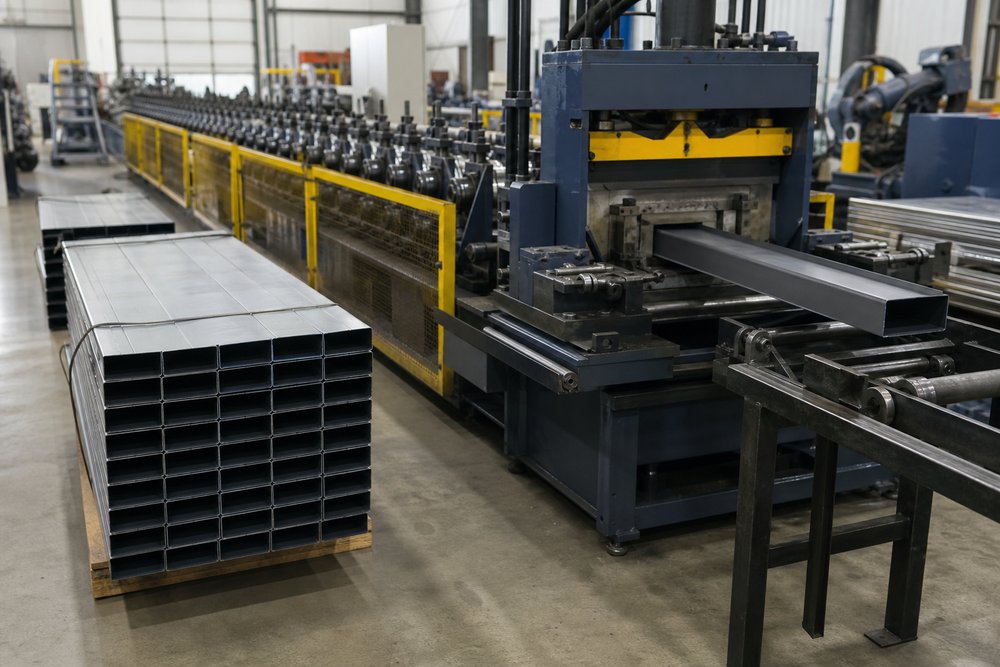
Start With the Profiles Your Market Demands
Round vs Rectangular: Which Sells More
Different regions prefer different downspout profiles. North American residential markets lean toward rectangular profiles, typically 2 by 3 inches or 3 by 4 inches. European and Asian markets often use round downspouts. Before ordering a machine, look at what your local distributors and contractors actually order. A machine built for rectangular profiles cannot easily make round ones.
Standard Sizes and Regional Preferences
Beyond basic shape, each market has its own standard dimensions. Some regions use K-style profiles that mimic decorative crown molding. Others need simple box profiles. Some machines handle only one width. Multi-width machines cost more but serve a broader customer base. Map your market first. Buy the machine second.
Material Thickness and Width Range
The Gauge Question
Downspout machines typically process 26 to 30 gauge steel, or 0.4 mm to 0.6 mm in metric terms. Thicker material needs a heavier machine frame and larger roller shafts. Thinner material requires tighter roller clearances to prevent wrinkling. Tell the manufacturer your target gauge range upfront. Do not assume every machine handles every thickness.
Width Range and Strip Feeding
The strip width entering the machine determines the unfolded profile width. Standard downspout strip widths range from 127 mm to 305 mm, which is 5 to 12 inches. Machines with wider strip capacity can produce larger profiles. Check that the decoiler and leveler match the strip width and coil weight you plan to run.
Production Speed vs Quality Tradeoffs
How Speed Affects Surface Finish
A machine running at 30 meters per minute sounds impressive. But high speed can cause surface marks and oil canning on thin material. For downspouts that sit in visible locations on buildings, surface quality matters. Slower speeds, around 15 to 20 meters per minute, often produce cleaner results on decorative profiles.
Matching Speed to Your Order Flow
Speed only matters if your order book fills the machine’s capacity. A machine running at 30 meters per minute that sits idle half the shift delivers no more output than a slower machine that runs continuously. Calculate your expected daily output. Buy a machine sized for that volume plus 30 percent headroom for growth.

Single vs Multi-Profile Machines
The Case for a Dedicated Single-Profile Machine
If your market needs one profile at one width, a single-profile machine is the simplest and most cost-effective choice. Fewer rollers mean lower purchase price and easier maintenance. Changeover is not a concern because the machine never changes. This fits manufacturers with one large contract or a focused product line.
When Multi-Profile Flexibility Pays Off
Manufacturers serving multiple customer types or geographic regions benefit from multi-profile machines. These machines use cassette systems or adjustable side rollers to switch between profiles. Changeover takes 15 to 60 minutes depending on the system. The upfront cost is higher but the machine captures revenue from multiple market segments.
What to Check in the Control System
PLC, HMI, and Production Data
Modern downspout machines use PLC controllers with touchscreen interfaces. Look for a system that stores recipe settings for each profile. The operator selects the profile on screen. The machine adjusts roller positions and cutoff length automatically. Production counters track output per shift. Fault diagnostics speed up troubleshooting.
Safety and Operator Ease
Check what safety features the control system includes. Emergency stops at the entry, forming, and exit sections are standard. Light curtains or safety gates protect the punch and cutoff areas. The interface should be intuitive. A new operator should be able to run basic production after one day of training.
Metoform Downspout Machine Options
Metoform builds downspout roll forming machines for round, rectangular, and custom profile requirements. The machines handle material from 0.3 mm to 0.8 mm thickness with strip widths up to 400 mm. Both single-profile and multi-profile configurations are available. Each machine includes PLC control with recipe storage and production monitoring.
For details on Metoform downspout roll forming machines, visit the downspout machine category page or contact the Metoform team for a custom proposal.
Frequently Asked Questions
Gutter machines produce the horizontal trough that collects roof runoff. Downspout machines produce the vertical pipe that carries water to the ground. The profiles are different. Some manufacturers run both machine types to supply complete rainwater systems.
Multi-profile machines with cassette systems allow profile changes without replacing individual rollers. The cassette contains all rollers for one profile. Swap the cassette to switch profiles. Single-profile machines need a full roller change, which takes longer.
Standard machines handle 26 to 30 gauge, or 0.4 mm to 0.6 mm. Some heavy-duty machines go up to 24 gauge for industrial applications. Always confirm the gauge range with the manufacturer before purchasing.
A standard downspout line needs one to two operators. One person handles coil loading and machine operation. A second person stacks finished pieces at the exit table. Automated stackers reduce the need for the second operator.
Lead times range from 60 to 120 days depending on machine complexity and the manufacturer’s order backlog. Standard single-profile machines ship faster. Custom multi-profile machines with special tooling take longer.
Contact Metoform to discuss a configuration that fits your market.


How can we assist you?
Tell us a bit more so we can route your request to the right expert.
Sign Up For Our Newsletter
Subscribe to our newsletter for product promos, news, and more.