
Is a Standing Seam Roll Forming Machine Worth the Investment?
Standing seam metal roofing is one of the fastest growing segments in building materials. Architects specify it for commercial, industrial, and high-end residential projects. For manufacturers and contractors, buying panels from a supplier cuts into margins. A standing seam roll forming machine shifts production in-house. But the machines are not cheap. This article breaks down the real costs, the payback timeline, and the hidden factors that determine whether the investment works for your business.
What Standing Seam Panels Cost From a Supplier
Current Market Panel Pricing
Supplier pricing for standing seam panels depends on steel gauge, coating type, and order volume. Common 24-gauge Galvalume panels range from 2.50 to 4.00 dollars per linear foot when bought in bulk. Custom colors, thicker gauges, and small orders push prices higher. Long lead times add another layer of cost through project delays.
The Volume Discount Problem
Suppliers give their best prices to large orders. Small and mid-size contractors ordering for a single building pay premium rates. Every project eats into their bid margin. This pricing structure is the fundamental reason manufacturers and contractors consider bringing production in-house. They want to escape the volume discount trap and control their own costs.
What It Costs to Make Them In-House
Raw Material and Direct Costs
The primary input is coil steel. Galvalume coil in 24 gauge runs roughly 0.90 to 1.50 dollars per pound depending on market conditions and coating specification. A typical panel uses about 1.2 to 1.8 pounds per linear foot. You also pay for labor, electricity, facility space, and packaging. Direct cost per linear foot typically lands between 1.30 and 2.20 dollars.
Machinery Investment and Depreciation
A standing seam roll forming machine from a quality manufacturer costs between 80,000 and 250,000 dollars depending on width, speed, gauge range, and automation level. Portable on-site machines sit at the lower end. Factory-based high-speed lines with automated stacking sit at the upper end. Spread that cost over a 10 to 15 year service life to calculate the per-foot machine cost.
The Break-Even Point for a Standing Seam Line
The Simple Math
Take a machine that costs 150,000 dollars. Divide by an estimated 10 year service life. That is 15,000 dollars per year or 1,250 dollars per month in machine cost. Now compare supplier panel pricing to your in-house direct cost. If the gap is 1.50 dollars per linear foot, you break even at about 10,000 linear feet per month. A single large commercial roof can use 15,000 to 30,000 linear feet.
Variable Factors That Shift the Timeline
The break-even point moves based on several factors. Higher steel prices narrow the gap between buying and making. Lower supplier prices in your region push the payback further out. If you run two shifts instead of one, the machine cost per foot drops quickly. The most common payback range is 18 to 36 months for shops with steady order flow.

Revenue Streams a Standing Seam Machine Opens Up
Selling Panels to Other Contractors
Once you own the machine, you can sell panels to other roofing contractors in your region. They get faster delivery than distant suppliers. You get a new revenue stream. This turns a cost-center purchase into a profit-center investment. Some machine owners report that panel sales to third parties cover the full machine payment within two years.
On-Site Roll Forming Services
Portable standing seam machines can run at the job site. This eliminates panel transportation costs and damage risk. Contractors charge a premium for on-site forming because it solves the panel length limitation. Factory-made panels max out at truckable lengths. On-site forming produces panels as long as the roof requires. This is a strong competitive advantage for bidding contractors.
Hidden Costs First-Time Buyers Miss
Installation, Tooling, and Facility Prep
Every machine needs proper installation. Expect to spend 5,000 to 15,000 dollars on the foundation, electrical connections, and compressed air setup. Each profile requires its own set of forming rollers. A full roller set costs 3,000 to 8,000 dollars per profile. If you plan to offer three panel profiles, budget for three roller sets in addition to the base machine cost.
Training and the Learning Curve
A standing seam machine is not a push-button appliance. Operators need training on coil loading, tension control, profile adjustment, and quality inspection. Budget at least one week for training with the manufacturer’s technician. Expect scrap rates of 5 to 10 percent during the first month of production as the team gains experience. This scrap represents real material cost that does not show on the machine invoice.
Metoform Standing Seam Machine Overview
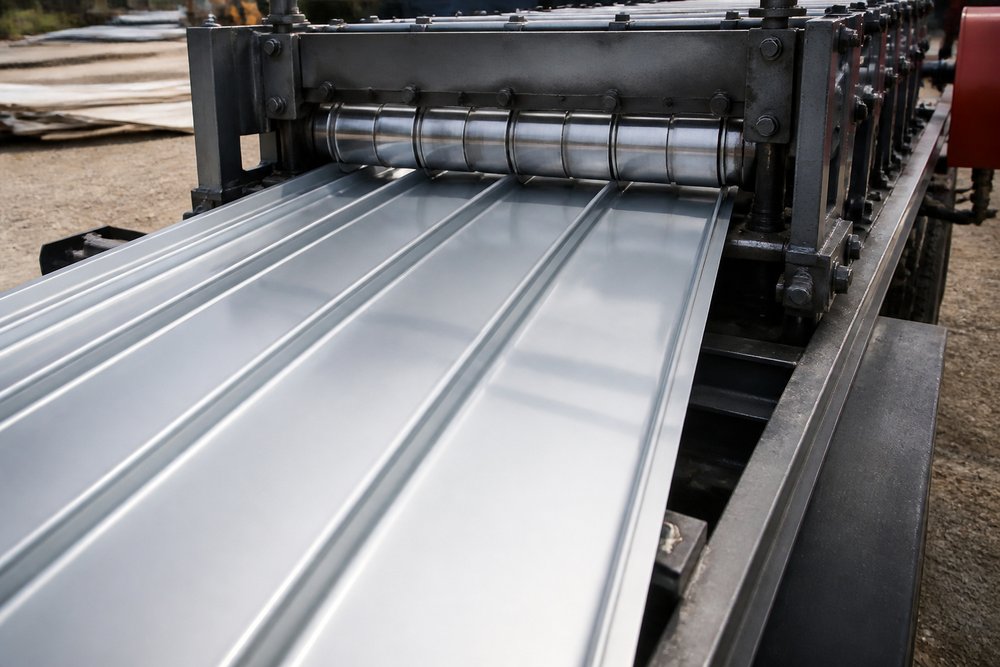
Metoform standing seam roll forming machines cover panel widths from 12 to 24 inches in material from 24 to 29 gauge. Both factory-based production lines and portable on-site machines are available. The PLC control system stores multiple profile recipes. Quick-change roll tooling reduces profile changeover time. Metoform has 15 years of roll forming experience and holds 63 patents.
For specifications on standing seam machines, visit the roof and wall panel machine category or the Metoform homepage to contact the engineering team for a detailed quotation.
Frequently Asked Questions
Most manufacturers find the investment works at roughly 8,000 to 12,000 linear feet per month of steady demand. Below that volume, buying from a supplier usually costs less. Run the numbers with your specific steel costs and local panel prices.
Operator training takes about one week with the manufacturer’s technician on site. The team learns coil loading, recipe selection, quality inspection, and basic troubleshooting. Full proficiency develops over the first month of daily production.
Some machines include a curving unit that applies a radius to panels as they exit the roll former. Not all standing seam machines have this capability. If your market includes curved roof designs, specify a curving unit when ordering.
Standing seam panels appear on commercial warehouses, retail buildings, schools, airports, agricultural buildings, and high-end residential homes. The clean vertical lines and hidden fasteners appeal to architects across most building types.
Factory production runs faster and produces panels to standard truckable lengths. On-site forming eliminates length limits and transportation damage. It costs more per foot to run on site but saves on logistics. Many companies own both a factory line and a portable machine.
Contact Metoform to discuss a configuration that fits your market.


How can we assist you?
Tell us a bit more so we can route your request to the right expert.
Sign Up For Our Newsletter
Subscribe to our newsletter for product promos, news, and more.