
Is an Ironworker Machine a Smarter Buy Than Separate Equipment?
Most steel fabrication shops own a punch press, a shear, and a notcher. Maybe a separate angle shear too. Each machine takes up floor space. Each needs its own operator or ties up the same operator walking between stations. Each has its own maintenance schedule, its own power connection, and its own consumable tooling. An ironworker machine combines punching, shearing, notching, and bending into one station. But the integration costs more upfront. Is the premium worth it?
Metoform supplies ironworker machines alongside roll forming lines. Here is the math broken down by floor space, labor, throughput, and maintenance, so you can decide for your own shop.
What an Ironworker Machine Actually Does
The Five Stations in One Frame
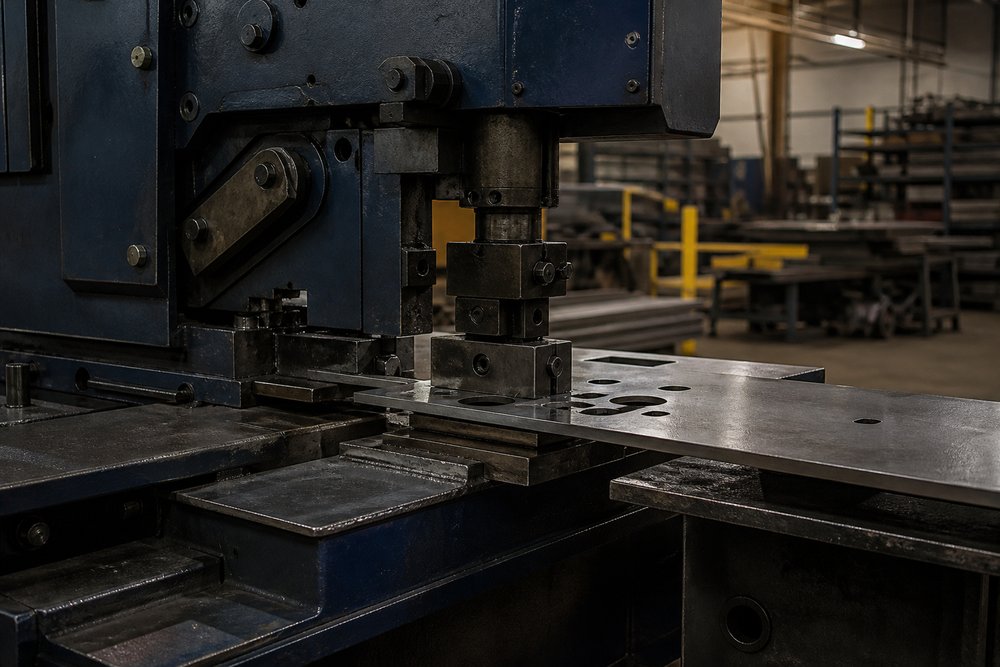
A standard ironworker machine has five workstations built into a single hydraulic frame. The punch station punches holes in flat bar, angle, channel, and plate. The flat bar shear cuts flat stock to length. The angle shear cuts angle iron at 45 or 90 degrees. The notcher cuts rectangular notches out of plate and angle. The bending station, available on some models, bends flat bar and small plate sections. Each station is powered by the same central hydraulic system. The operator moves the workpiece from one station to the next without leaving the machine. That is the core value proposition: five operations, one footprint, one operator, one power connection, one set of consumables to track.
Hydraulic Power and Tonnage: What the Numbers Mean
Ironworker tonnage ratings typically range from 45 tons to 120 tons or more. The tonnage rating is the maximum force the hydraulic system can deliver to the punch station. Higher tonnage means the machine can punch larger holes in thicker material. A 45-ton machine punches a 20mm hole in 10mm plate. A 90-ton machine punches a 30mm hole in 20mm plate. The tonnage also determines the maximum capacity of the shear and notcher stations. Buy the tonnage that covers your heaviest workpiece, not your average. You cannot add tonnage later without buying a new machine. The difference between a 60-ton and a 90-ton ironworker might be 20 percent on the purchase price but it doubles the capacity on certain operations.
Floor Space: One Machine vs Three Separate Units
How Much Floor Space Separate Equipment Actually Uses
Separate equipment is not just the machine footprints. A hydraulic punch press takes up about 2 square meters. A plate shear takes up 3 to 4 square meters including the infeed and outfeed tables. An angle shear takes up another 2 square meters. A notcher adds 1 to 2 square meters. That is 8 to 10 square meters of machine footprints. But you also need operator access around each machine. Material staging areas in front and behind each station. Walkways between them so the operator can move workpieces from the punch to the shear to the notcher. In practice, three or four separate machines consume 25 to 35 square meters of productive shop floor.
What an Ironworker Frees Up
An ironworker with five stations sits in a footprint of 3 to 6 square meters depending on the tonnage class. Add operator workspace and material staging and the total envelope is 10 to 15 square meters for all five operations. That is roughly half of what separate equipment requires. The freed-up floor space can hold another production cell, a welding station, or additional material storage. At industrial lease rates, 15 square meters saved over 5 years can represent $5,000 to $15,000 in rent avoided, depending on your local market. The space savings alone rarely justify an ironworker purchase. But combined with labor savings, the floor space argument strengthens the case considerably.
Labor: One Operator vs a Crew
The Walking Time Nobody Counts
In a shop with separate machines, one operator typically runs the punch press and shear while moving material between them. Each walk from the punch to the shear to the notcher takes 10 to 15 seconds. If the operator makes 200 trips per shift, that is 30 to 50 minutes of walking time per day. Over a year of 250 working days, that is 125 to 200 hours of unproductive movement. At a loaded labor rate, that walking time costs thousands of dollars annually. In a two-operator shop where one person runs the punch and the other runs the shear and notcher, you are paying two people for work that one operator on an ironworker can do in fewer hours.
Skill Requirements and Cross-Training
Running separate machines requires the operator to understand four different control systems, four different tooling setups, and four different maintenance routines. Cross-training a new hire on all four stations takes weeks. An ironworker has one control panel, one hydraulic system, and tooling that is changed at each station with a common set of tools. Training a new operator on an ironworker takes one to two weeks. When an experienced operator calls in sick, the backup operator can step into an ironworker station faster than they can manage four separate machines. This operational resilience matters more than most buyers realize during the purchasing decision.
Throughput Comparison: Integrated vs Standalone Workflow
Part Flow: Batch vs Continuous
With separate machines, the workflow is batch-based. The operator punches all the holes in a stack of parts, then moves the stack to the shear, then moves what remains to the notcher. Each batch transfer introduces queues. Parts sit waiting between operations. If the punch station is busy and the shear is idle, that idle time is lost throughput. An ironworker allows continuous flow. The operator picks up a blank, punches it, shears it to length, notches it, and stacks the finished part, all without putting the part down between operations. The part is finished in 15 to 30 seconds instead of sitting in a queue between three separate steps. For a typical fabrication run of 500 identical parts, the continuous flow on an ironworker can be 30 to 50 percent faster than batch processing across separate machines.
Setup Time Between Part Types
Changing tooling on separate machines requires adjusting four different fixtures. Punch dies on the press. Shear blade gap on the plate shear. Angle of cut on the angle shear. Notcher width and depth. Each setup takes 5 to 15 minutes per machine, for a total of 20 to 60 minutes to switch the line to a new part. On an ironworker, the operator changes the punch die and adjusts the shear back gauge and the notcher stop. All adjustments happen at one station. Total setup time is 10 to 20 minutes. Over a day with four part changes, the ironworker saves 40 minutes to over two hours of non-productive setup time. If your shop runs short batches with frequent changeovers, the setup time savings on an ironworker compound rapidly.

Maintenance and Tooling Costs Over Time
One Hydraulic System vs Four Separate Systems
Separate equipment means separate hydraulic power packs, separate pumps, separate filters, and separate oil changes. The punch press needs its hydraulic oil changed every 2,000 hours. The shear needs its own oil change. So does the notcher. Each system has hoses that age and seals that leak. Tracking preventive maintenance across four machines takes discipline. An ironworker has one hydraulic system. One pump. One reservoir. One set of filters. One oil change schedule. The annual hydraulic maintenance cost for an ironworker is roughly one-third of what four separate systems cost, not because the components are cheaper but because there are fewer of them.
Tooling Life and Replacement Costs
Punch dies and shear blades are the main consumables. Punch dies last 10,000 to 50,000 strokes depending on material thickness and hardness. Shear blades last 100,000 to 500,000 cuts. The tooling cost per piece is the same whether the punch is on a standalone press or integrated into an ironworker. The efficiency gain is that one tooling inventory covers all five operations. You do not need to stock punch dies for the press, shear blades for the plate shear, blades for the angle shear, and tooling for the notcher as separate SKUs. One supplier. One reorder process. One set of part numbers. The administrative overhead of tooling management is invisible in the purchase price but very visible in the maintenance budget.
Metoform Ironworker Machine Overview
Machine Specifications
Metoform supplies ironworker machines in tonnage ratings from 45 to 120 tons. Standard models include punch, flat bar shear, angle shear, and notcher stations. Optional bending stations are available on 60-ton and larger models. Punch capacity ranges from 20mm diameter in 10mm plate at 45 tons to 30mm diameter in 20mm plate at 90 tons. Angle shear capacity ranges from 75mm x 75mm x 6mm to 150mm x 150mm x 15mm. All machines use a centralized hydraulic system with overload protection and adjustable stroke length.
Installation and Support
Metoform offers complete installation, commissioning, operator training, and after-sales support. Our team provides machine setup, technical guidance, remote assistance, and spare parts to ensure reliable performance, maximum productivity, and minimal downtime.
Metoform Ironworker Machine Solutions
Metoform supplies ironworker machines from 45 to 120 tons with punch, shear, angle shear, and notcher stations. Optional bending stations available on 60-ton and larger models. Every machine includes operator training and startup support.
Discuss Your Production Needs
Talk with Metoform about a configuration that fits your materials, profile requirements, and production goals.
Frequently Asked Questions
A standard ironworker performs punching, flat bar shearing, angle shearing, and notching. Some models add a bending station. All five operations run from a single hydraulic power unit and are accessed at separate stations around the machine frame.
An ironworker with all five stations occupies 3 to 6 square meters of machine footprint. With operator workspace and material staging included, the total envelope is 10 to 15 square meters. Separate punch, shear, notcher, and angle shear equipment typically needs 25 to 35 square meters for the same capability.
Yes, but tonnage ratings are based on standard mild steel with a tensile strength of approximately 400 MPa. High-strength steel with tensile strengths above 600 MPa requires roughly 50 percent more tonnage for the same hole size and plate thickness. Size the machine based on your hardest material. A 60-ton machine punching high-strength steel performs like a 40-ton machine on mild steel.
Punch station: change the punch and die set for different hole diameters and shapes. Shear station: adjust the blade gap for different material thicknesses. Angle shear: change the cutting angle between 45 and 90 degrees. Notcher: adjust the stop for notch depth. All adjustments use hand tools and take a few minutes per station. No cranes or special fixtures required.
An ironworker machine with proper maintenance lasts 20 to 30 years in a typical fabrication shop. The main frame has no wear parts. The hydraulic pump and cylinder may need rebuild or replacement after 15,000 to 20,000 operating hours. Punch dies, shear blades, and notcher tooling are consumable items with service lives measured in strokes or cuts, as described above.
Explore the Explore ironworker machines for your facility.


How can we assist you?
Tell us a bit more so we can route your request to the right expert.
Sign Up For Our Newsletter
Subscribe to our newsletter for product promos, news, and more.