
What Is a Sandwich Panel Production Machine?
A sandwich panel machine is an automated production system used to manufacture composite sandwich panels. Its main function is to combine a lightweight core material between two metal sheets through heating and pressing, forming a building material with structural strength and thermal insulation.
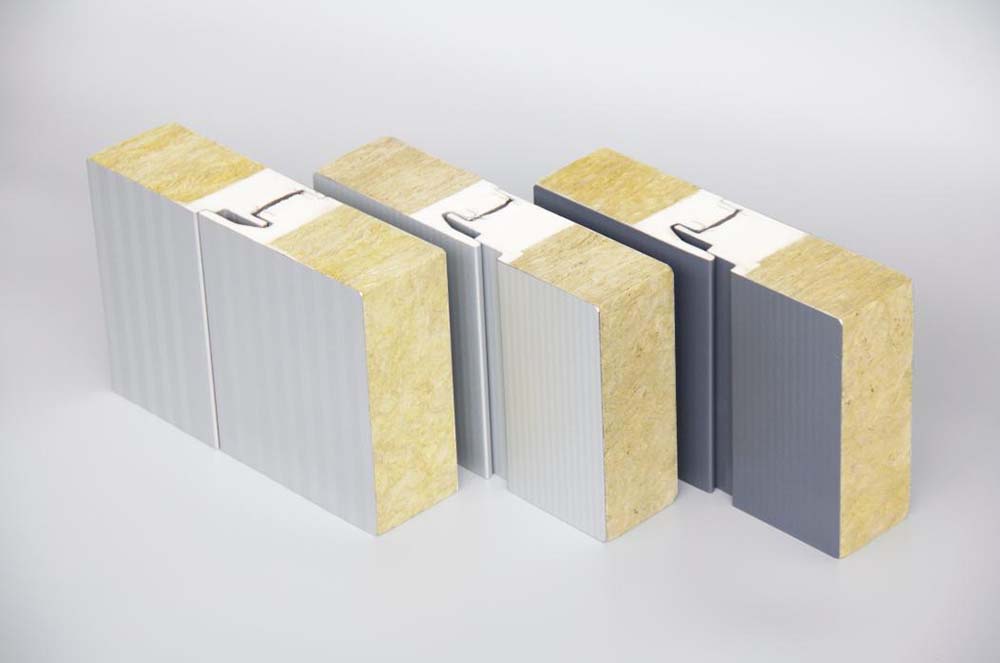
Sandwich panels usually consist of three layers, including upper and lower metal sheets and a core layer in the middle. This structure provides both strength and low weight, and it is widely used in building enclosures, cold storage facilities, and clean rooms.
Main Components of a Sandwich Panel Machine
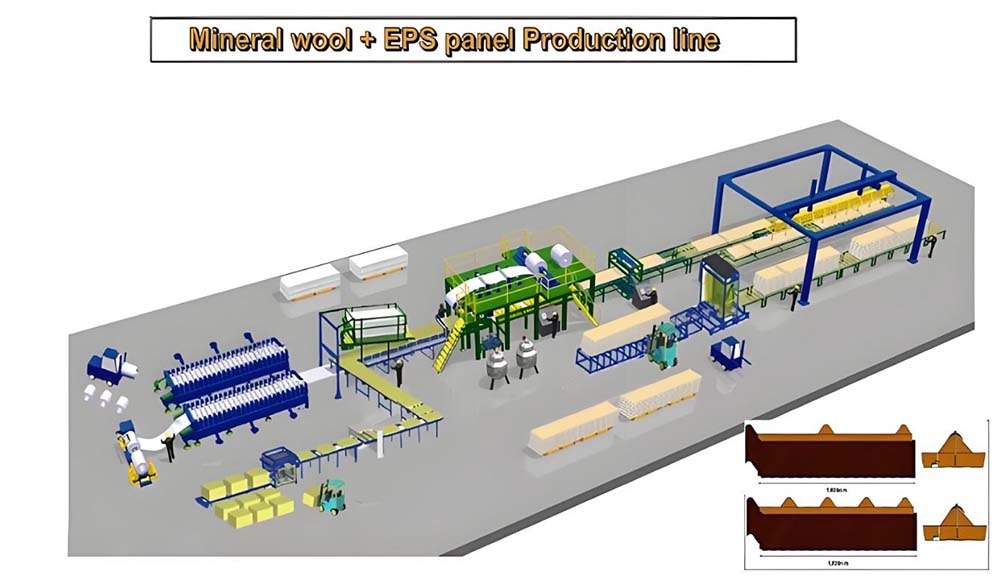
A sandwich panel machine includes several connected units that work together through the full production process. Each part handles a specific task, from feeding raw materials to preparing finished panels for delivery. When these components run in coordination, the line can keep stable output and consistent panel quality.
Feeding and Decoiling System
Production begins with metal coils. This system opens steel or aluminum coils and feeds the sheets into the line at a steady speed. Stable feeding helps keep the following steps smooth and reduces the risk of misalignment during production.
Roll Forming System
After entering the line, the metal sheets pass through roll forming equipment. In this stage, the sheets are shaped into specific profiles such as tongue and groove or corrugated forms. These profiles improve panel connection and support different wall and roof uses.
Foaming or Core Filling System
The core layer is added between the two metal sheets in this section. Based on the panel type, the line may use PU foaming, rock wool filling, or EPS filling. Even distribution of the core material helps improve bonding quality and keeps the internal structure more uniform.
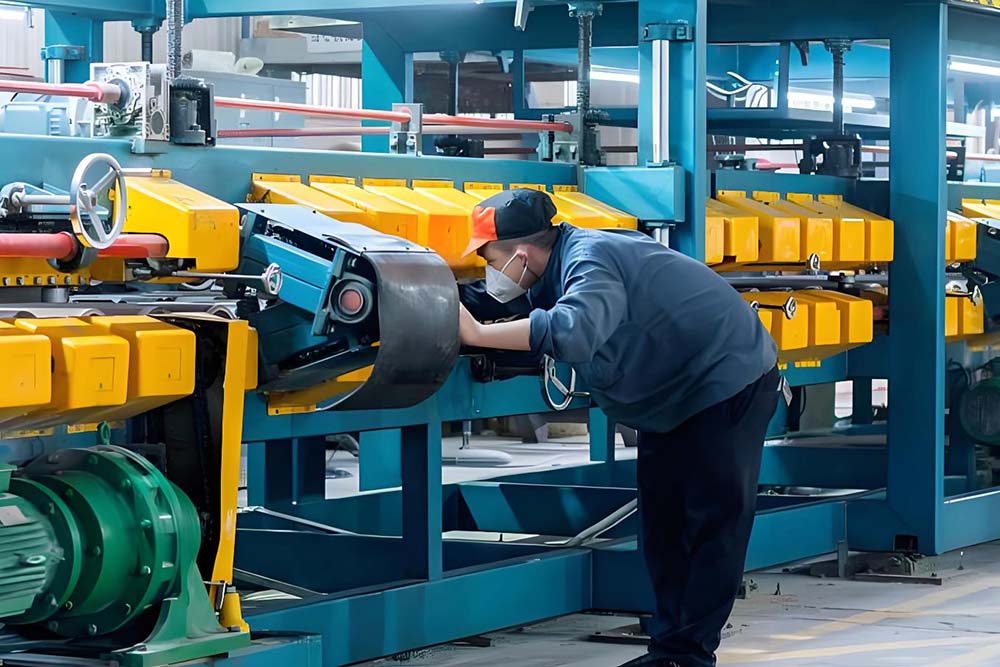
Laminating and Double Belt Press System
In the laminating section, heat and pressure join the metal sheets and the core material into one complete panel. The double belt press keeps the panel moving under controlled pressure, which helps maintain even thickness, good bonding strength, and a smooth surface.
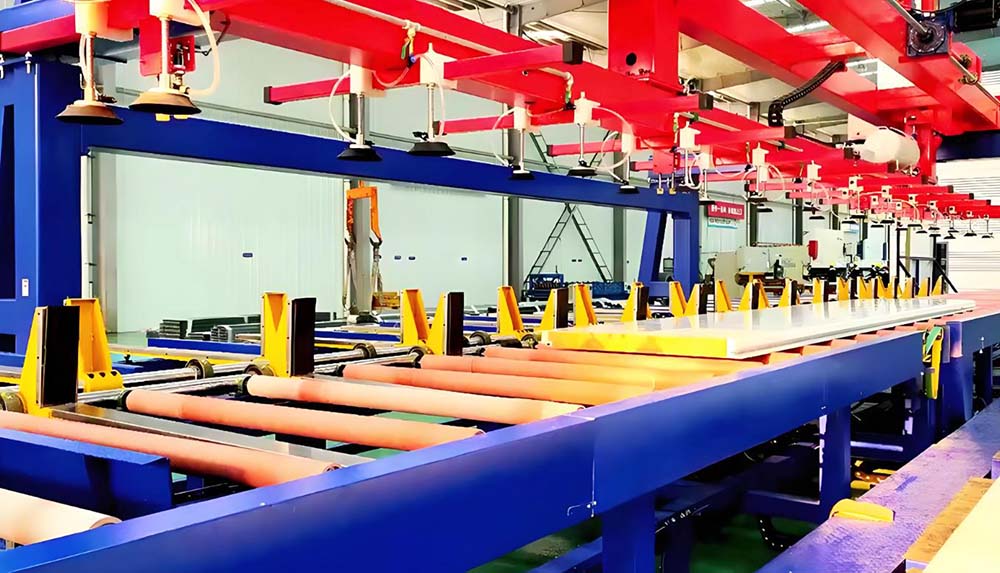
Cutting and Conveying System
After lamination and curing, the continuous panel moves to the cutting section. The machine cuts the panel according to the required length and sends it forward through the conveying system. Accurate cutting helps keep product dimensions consistent and supports cleaner installation later.
Stacking and Packaging System
At the end of the line, finished panels are stacked in order for inspection and packing. This part helps improve handling efficiency and protects the panels during storage and shipment. It also makes the final delivery process more organized.
Working Principle of a Sandwich Panel Machine
The machine operates through a continuous production process. Multiple stages are connected in one line, which helps improve production efficiency and supports stable automated manufacturing. Each step works together to turn raw materials into finished sandwich panels with consistent structure and quality.
Raw Material Preparation
Metal sheets and core materials are prepared in advance and supplied to the line in controlled amounts. Proper material preparation helps maintain stable product performance and supports smoother operation in the following stages.
Panel Forming
Metal sheets enter the roll forming system and are shaped into the required profile. This step creates the base structure for lamination and also helps the finished panel meet different installation and application needs.
Core Injection or Laying
The core material is injected or placed between the two metal layers to build the sandwich structure. A uniform core layer helps improve bonding quality and keeps the internal structure of the panel more stable.
Heating, Laminating, and Curing
Under controlled temperature and pressure, the metal sheets and core material are bonded together and gradually cured. This process forms a solid panel and helps improve strength, flatness, and overall structural stability.
Fixed-Length Cutting
After the panel is formed, it is cut according to preset dimensions. Accurate cutting helps maintain consistent specifications and makes the finished panels easier to handle, transport, and install.
Inspection and Packaging
Finished panels are checked for properties such as strength, appearance, and thermal conductivity before packaging. This step helps confirm product quality and prepares the panels for storage or shipment.
Detailed Sandwich Panel Production Process
The sandwich panel production process includes several connected stages, and each stage affects the final panel quality. From raw material preparation to final packaging, stable control across the full line helps improve bonding performance, panel appearance, and size consistency.
Raw Material Metering and Mixing
In PU panel production, materials such as isocyanate and polyol are mixed in precise ratios to maintain stable foaming performance. Accurate metering helps control foam density and bonding quality inside the panel. It also supports more consistent insulation performance and reduces material waste during production.
Mixing and Foaming Reaction
A high pressure mixing head injects the raw materials into the cavity, where the chemical reaction begins in a short time. As the material expands, it forms the insulation core between the metal sheets. A stable foaming reaction helps the core spread more evenly and improves the internal structure of the finished panel.
Lamination
After foaming starts, the core material is bonded with the metal sheets under heat and pressure. This stage forms the full sandwich structure and gives the panel its mechanical stability. Good lamination helps improve surface flatness, bonding strength, and overall product consistency.
Cooling and Solidification
After lamination, the panel moves through a cooling section to complete curing and solidification. Proper cooling helps the panel keep its shape and reduces the chance of bending or surface distortion. This stage also supports more stable dimensions before cutting and stacking.
Finished Product Processing
The final stage includes trimming, surface cleaning, inspection, and packaging. These steps help remove excess material, improve the finished appearance, and confirm that the panel meets production standards. Well organized final processing also makes storage, transport, and later installation more convenient.
Technical Features of Sandwich Panel Machines
Modern sandwich panel machines combine stable mechanical structure, automated control, and flexible production capacity in one line. In actual manufacturing, technical performance is reflected not only in output, but also in product consistency, process stability, and daily operating efficiency. The following features show how these machines support reliable panel production in different application settings.
High Automation
The production line can run in a continuous and coordinated manner, which reduces manual handling across multiple stages. From decoiling and roll forming to core filling, laminating, cutting, and stacking, each process is connected through an integrated control system. This helps lower labor intensity and keeps production flow smooth. It also allows manufacturers to maintain steady output during long production runs.
High Precision Control
PLC systems and digital control units track temperature, pressure, line speed, and panel thickness throughout the production process. With real time adjustment, the machine can keep each production stage within a stable operating range. This improves dimensional accuracy and bonding quality. It also helps reduce variation between panels, which is especially useful for projects that require uniform thickness, flat surfaces, and clean edge quality.
Multi Material Compatibility
A sandwich panel machine can work with different core materials such as PU, rock wool, and EPS, which gives manufacturers more flexibility in product planning. Different projects often require different panel properties, such as thermal insulation, fire resistance, or lower weight. With compatible production configurations, one line can support a wider product range and respond more easily to market demand. This also helps manufacturers serve customers from construction, cold storage, and industrial applications.
Energy Saving and Environmental Performance
Many modern machines use more efficient heating systems and improved material control to reduce energy use during production. In foaming applications, eco friendly blowing agents are also widely used to support cleaner manufacturing standards. Better control of raw material feeding and process temperature can reduce waste and improve resource use. As a result, manufacturers can lower operating costs while moving toward more environmentally responsible production.
Application Value of Sandwich Panel Machines
Panels produced by these machines provide thermal insulation, sound insulation, fire resistance, and structural strength. They are used in industrial buildings, cold chain logistics, clean rooms, and public facilities. Their use continues to expand as different construction needs develop.
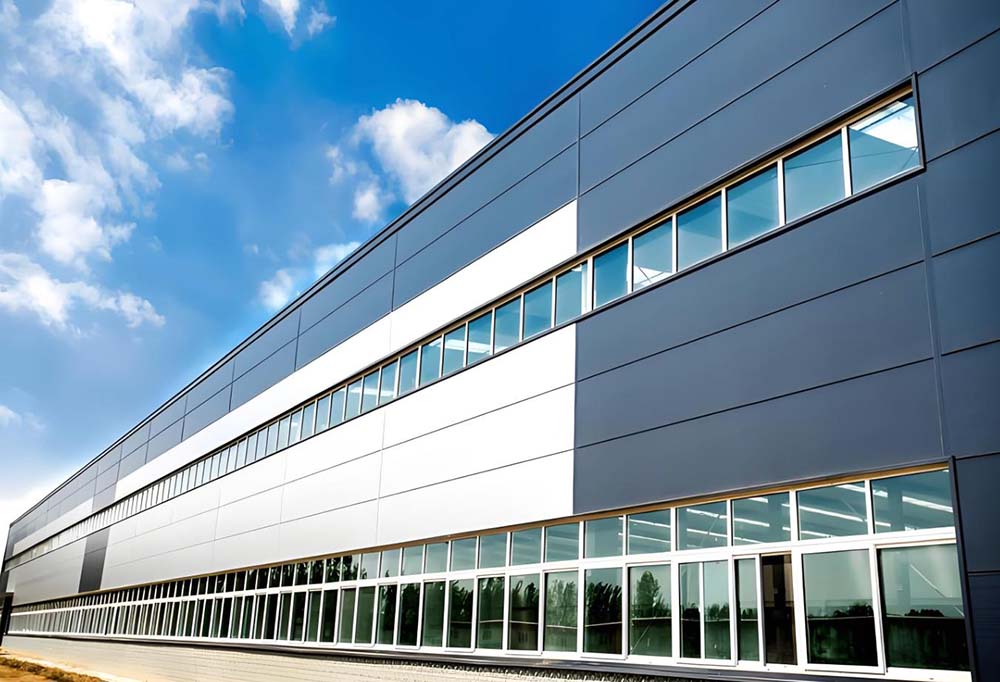
In industrial buildings, these panels are applied in factories, workshops, and warehouses. They are used for wall and roof systems, helping maintain stable indoor conditions and reducing external environmental impact.
In cold chain logistics, they are used in cold storage facilities, refrigerated warehouses, and distribution centers. Their insulation performance supports temperature control during storage and transportation processes.
In clean rooms, they are used in industries such as food processing, pharmaceuticals, and electronics. They are applied in wall partitions and ceiling systems to support controlled and hygienic environments.
In public facilities, they are used in buildings such as exhibition halls, sports venues, and temporary service structures. Their ease of installation allows for faster project completion and flexible construction arrangements.
Conclusion
A sandwich panel machine combines mechanical systems, chemical processes, and automation control. Through continuous production, it converts raw materials into finished panels with high efficiency. It also improves production consistency while maintaining product performance.
If you are looking for high quality sandwich panel equipment or a complete production line solution, please contact us. We will reply to you as soon as possible.


How can we assist you?
Tell us a bit more so we can route your request to the right expert.
Sign Up For Our Newsletter
Subscribe to our newsletter for product promos, news, and more.