
What Is a Cable Tray Roll Forming Machine and How It Works
Cable trays are the backbone of industrial electrical infrastructure. They support and route cables in factories, data centers, power plants, and commercial buildings. Demand is growing as construction and energy projects expand worldwide. A cable tray roll forming machine lets manufacturers produce these products in-house. This article explains how these machines work, what they produce, and who uses them.
How Cable Trays Are Made
The Manufacturing Process Step by Step
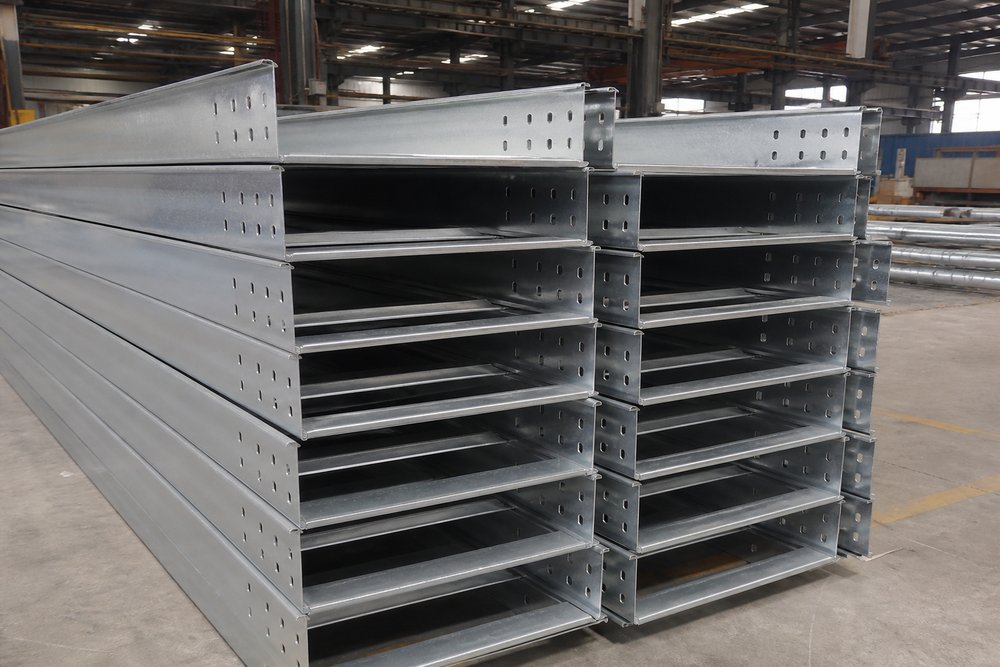
Cable tray production starts with a steel coil loaded onto a decoiler. The coil feeds into a leveler that flattens the strip before it enters the forming section. A series of roller stations progressively bend the flat metal into the tray profile. After forming, a hydraulic or servo-driven punch creates mounting holes and slots. A flying cutoff saw then slices the finished tray to length without stopping the line.
From Raw Steel to Finished Product
The full process takes seconds per piece. A typical line runs at 10 to 20 meters per minute depending on profile complexity and material thickness. Modern lines include automatic stackers that collect cut pieces without manual handling. Quality inspection happens at the exit. The finished trays are bundled and shipped to electrical contractors and project sites.
What a Cable Tray Roll Former Actually Does
Bending Without Heat
A roll forming machine works at room temperature. It does not heat the metal. Each pair of rollers applies a small amount of bend. After passing through 14 to 20 stations, the flat steel strip becomes a finished cable tray profile. This cold forming process preserves the steel’s galvanized coating and structural integrity.
One Line, Multiple Operations
Beyond bending, the machine also punches and cuts. Hydraulic punch units create the side holes and bottom perforations that electricians use for mounting and cable tie-downs. The servo-driven cutoff saw trims each tray to exact length specifications. Some lines include embossing stations for stiffness ribs or manufacturer logos.
Key Components of a Cable Tray Line
The Entry Section: Decoiler and Leveler
The decoiler holds the raw steel coil. It can be manual, semi-automatic, or fully automatic with a coil car for fast changeover. The leveler follows the decoiler. It removes coil set and ensures the strip enters the roll former flat. Uneven strip material at the entry creates crooked trays at the exit.
The Forming and Finishing Section
The roll forming unit is the heart of the machine. It contains the roller cassettes that shape the profile. The punch press unit adds holes and cutouts. The cutoff system slices each tray. A runout table and stacker collect the finished pieces. PLC control coordinates all these stations with servo-driven precision.

Common Profiles a Cable Tray Machine Produces
Ladder, Perforated, and Solid-Bottom Trays
Ladder trays have two side rails connected by rungs. They provide the most ventilation and are common in heavy industrial settings. Perforated trays have holes punched into the bottom for airflow and drainage. Solid-bottom trays offer full cable protection. Many modern machines are multi-profile and can switch between these types with quick-change tooling.
Specialty and Heavy-Duty Profiles
Some machines also produce wire mesh trays and heavy-duty channel trays. Wire mesh trays are lighter and suit data centers and office buildings. Heavy-duty channel trays handle large cable bundles in utility tunnels and substations. The machine’s frame and roller diameter determine which gauge and width it can handle.
Who Buys Cable Tray Machines and Why
Cable Tray Manufacturers Expanding Capacity
Established cable tray manufacturers buy machines to replace old lines or add capacity. They seek higher speed, better accuracy, and multi-profile flexibility. A new line can double output while reducing scrap rates. These buyers know their market and focus on technical specifications.
New Entrants Entering the Electrical Supply Market
Steel fabricators and general building material suppliers also invest in cable tray machines. They see steady demand from construction and infrastructure projects. Making trays in-house cuts supply chain costs. They can serve local contractors faster than distant suppliers. A single machine opens a new product category for their business.
Metoform Cable Tray Solutions
Metoform manufactures cable tray roll forming machines with over 15 years of engineering experience. The company holds 63 patents in roll forming technology. Metoform machines cover ladder, perforated, solid-bottom, and multi-profile formats. Each line is built to the customer’s width, gauge, and speed requirements. The control system uses PLC automation for consistent quality across long production runs.
Frequently Asked Questions
Most lines process galvanized steel, stainless steel, and aluminum. The typical material thickness range is 0.8 mm to 3.0 mm. Galvanized steel is most common because it resists corrosion without extra coating steps.
Production speed depends on profile complexity and material thickness. A typical line runs 10 to 20 meters per minute. Simpler profiles such as solid-bottom trays run faster. Multi-bend ladder trays run at the lower end of the range.
Payback varies with order volume and local market prices. Many manufacturers recover their investment within 18 to 36 months. The key driver is the margin between coil steel cost and finished tray selling price.
Yes. Machines with adjustable side roll stations can switch between widths, typically from 50 mm to 900 mm. Width changeover uses spacers or servo-driven automatic adjustment depending on machine configuration.
Daily checks include roller surface inspection and lubrication of bearings and chains. Weekly tasks cover punch die sharpness and cutoff blade condition. Annual maintenance involves gearbox oil changes and alignment verification.
Contact Metoform to discuss a configuration that fits your market.


How can we assist you?
Tell us a bit more so we can route your request to the right expert.
Sign Up For Our Newsletter
Subscribe to our newsletter for product promos, news, and more.