
Six Roll Forming Defects and Where They Begin
When a roll-formed profile leaves the line twisted, bowed, wavy, or out of tolerance, operators often check the last stand first. In many cases, however, the problem started several stations earlier.
Uneven material flow, misaligned rolls, an unsuitable forming sequence, or built-up stress can gradually create defects as the strip moves through the line. By the time the issue is visible at the exit, the original cause may be well upstream. This article looks at six common roll forming defects, where they begin, and what to check before adjusting the wrong stand.
Why the Defect Shows Up at the End of the Line
Roll forming builds a cross-section in small steps. Each stand bends the strip a few degrees, and the next stand picks up where that one stopped. That is what lets a line push a long purlin out continuously at speed. It also means every stand inherits the work of the ones before it.
A strip that enters slightly off center gets worked harder on one side. That imbalance does not correct itself downstream. It compounds, stand after stand, until the finished profile carries a curve that was baked in somewhere around station three.
So when a defect shows up, do not reach for the last set of rolls. Read the profile back to front until you find the station where the deviation first appears, then work forward. Shops that skip this step burn a shift adjusting the exit and end up chasing the same defect to a different part of the line.
The Six Defects You Will Actually See
Twist
A gradual rotation along the length. Short samples look fine. Lay the full stick on the floor and one flange lifts while the opposite one drops. Asymmetric sections such as C-purlins and hat profiles twist first, because forming forces on the two sides never balance perfectly.
Bow and Camber
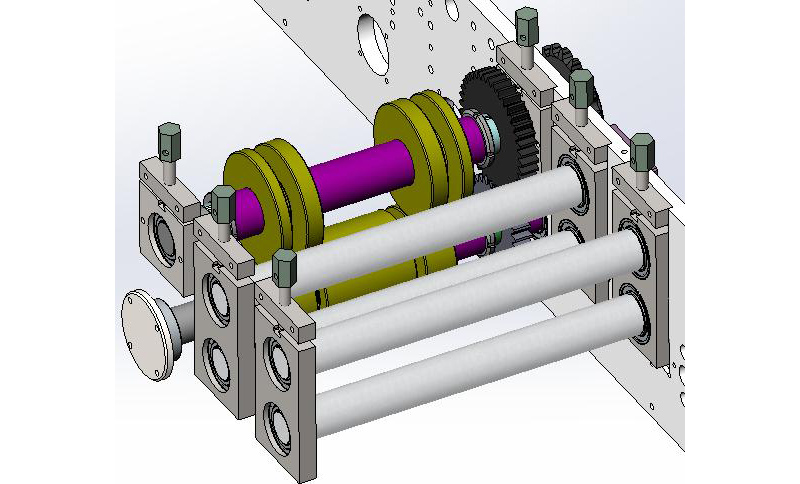
Bow curves the profile vertically. Camber bends it sideways. Both trace back to unequal longitudinal strain across the section. An easy check on the shop floor is to lay the profile down and sight along it from one end. Camber shows up as a sideways drift, bow as a rise or dip in the middle.
Edge Wave
Ripples that run along the edge of the strip. This one is compressive. When a station feeds material faster than the station ahead of it can absorb, the extra length has nowhere to go and buckles at the free edge.
End Flare
The first and last few inches of the profile open up or close down relative to the middle. It comes from the cut releasing stored stress, and it is worst on profiles carrying a lot of residual stress from a hard pass design.
Dimensional Drift
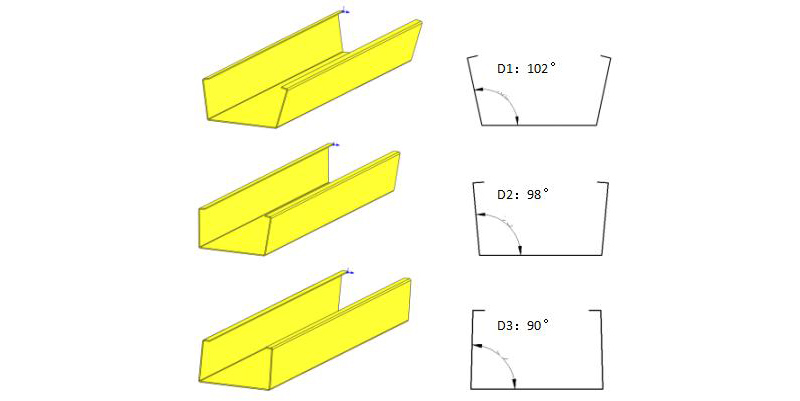
Flange width, web height, or lip length creeping outside the drawing over weeks of production. Roll wear does this slowly and quietly. So does a coil with different yield strength than the last one. Catching it takes measuring on a schedule, not a glance at the profile.
Surface Marking
Scuffing, scoring, or periodic marks that line up with roll rotation. Usually roll slip, contamination, or a gap set tight enough that the roll face drags on the strip. On prepainted material, that scrap is not recoverable.
Five Root Causes Behind Most Roll Forming Defects
- Incoming coil condition. Coil set, camber, and crown carry straight through into the finished profile. An entry leveler that is not doing its job lets material memory survive all the way to the exit, and yield strength that varies across the strip width splits the strain imbalance wider.
- Strip entry and guide setup. A guide that is worn, loose, or set a fraction off center steers the strip into every station that follows.
- Pass design and bend increments. Asking one station to make a large bend puts more strain into the material than it can absorb. High-strength steel is the least forgiving here, since springback runs higher and residual stress grows with it. Spread the same total angle across more stations and the profile settles.
- Roll alignment and pass line. Shafts that are not parallel, stands sitting at different heights, or a pass line with a ramp in it will bow material even when the tooling is right.
- Line speed. Running above the speed the pass schedule was designed for leaves each station working on a section that has not relaxed yet. The result is rarely one defect. It is a family of them showing up together.
A One-Hour Roll Forming Line Check You Can Run Today
- Cut a sample at least three meters long and lay it on a surface you know is flat.
- Sight along the length from both ends and note whether the deviation is vertical or sideways.
- Measure flange and web at three points along the stick, not only at the ends.
- Ramp line speed in steps on a single coil and record where the defect first appears.
- Inspect the entry guides for wear and confirm the strip is centered before the first pass.
- Check the straightener setting at the exit and the condition of the last two stands.

One result tells you a lot on its own. If the defect flips direction when you turn the coil over, the coil is a bigger suspect than the mill.
How Machine Design Prevents Roll Forming Problems Before Production Starts
Part of this is a setup problem. Part of it is a design decision made years before the first coil was loaded.
Machines built around fast size-change cut down the number of times an operator has to touch the rolls. A light gauge steel framing machine that runs from a CSV file produced by the design software removes manual measurement and the errors that ride along with it. On a purlin roll forming machine, one-click size change and program control let a shop move between profiles without rebuilding the line, which counts for a lot because most twist and camber complaints land right after a changeover.

None of that removes every cause. Coil quality, pass design, and how level the line sits still decide whether the profile leaves the mill straight.
Metoform has been building cold roll forming machines since 2009 and holds 63 research and development patents, including a fast cutting system and fast size-change technology. Our machines run in more than 72 countries, the program software is developed in-house, and lifetime upgrades come with it. If you are chasing a profile that will not hold tolerance, the steel coil you are feeding deserves as much scrutiny as the machine.
Where to Start When a Roll-Formed Profile Won’t Hold Tolerance
Most roll forming problems are easier to solve when you trace the defect back through the line instead of focusing only on the finished profile. Find the station where the deviation first appears, correct the setup or tooling issue there, and then check a full-length sample to confirm the result. If the same defect shows up on different coils or multiple profiles, the problem may be related to the pass design, tooling arrangement, or overall mill setup.
For manufacturers running roof and wall panel lines or light-gauge steel framing equipment, Metoform can review the line layout and tooling based on the profiles you need to produce.

Product Recommendation


How can we assist you?
Tell us a bit more so we can route your request to the right expert.
Sign Up For Our Newsletter
Subscribe to our newsletter for product promos, news, and more.